
Digital Workforce: How AI Agents Are Replacing Employees in Business
Chapter 1: The Fourth Industrial Revolution Is Already Here - Powered by AI
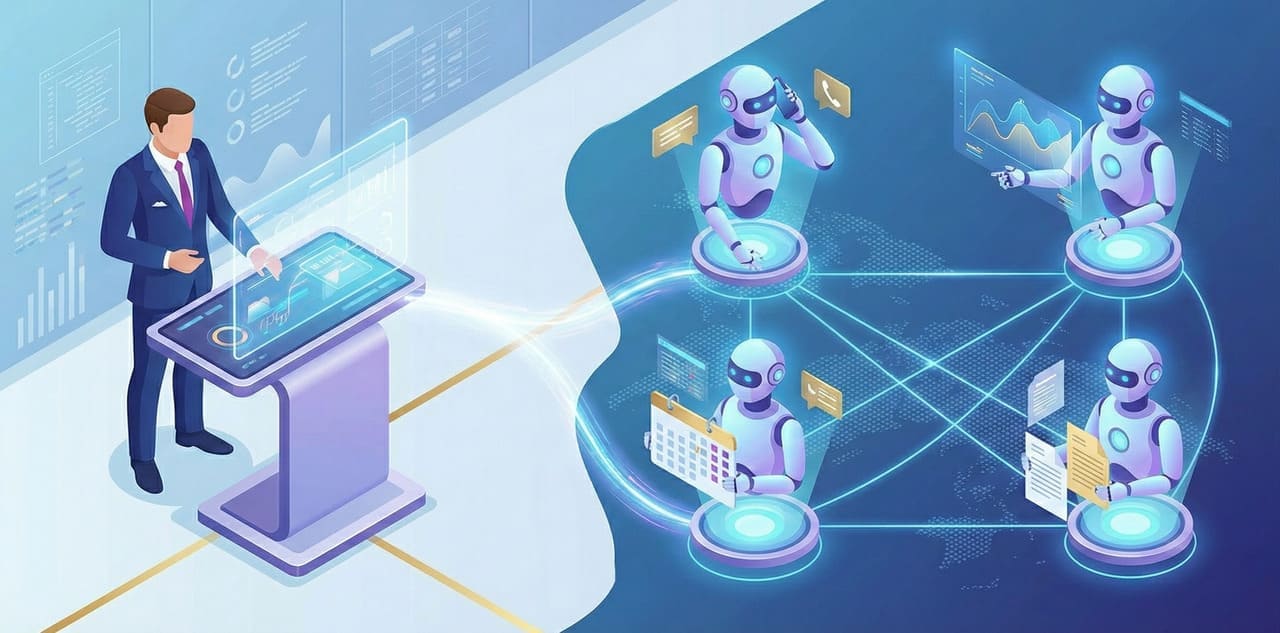
We are living through a quiet but sweeping revolution that is reshaping the economy and society more profoundly than any technological shift that came before. This is no longer a futuristic forecast - it is current business reality. Artificial intelligence agents and smart bots are no longer peripheral tools; they are evolving into an autonomous digital workforce capable of replacing human employees across a broad range of roles, particularly those built on interactions and repetitive processes.
The clearest first wave of this transformation is hitting customer service and sales. Global and local companies alike are grasping the enormous economic potential of automation. Instead of hiring, training, and managing armies of representatives, businesses can now deploy AI systems capable of conducting complex text and voice conversations with customers - 24 hours a day, 7 days a week, without breaks, vacations, or sick days. The result is not only massive savings in operational costs, but a dramatic leap in efficiency, scalability, and the collection of critical business data.
Chapter 2: Under the Hood - How Modern AI Agents Actually Work
To grasp the scale of this change, we need to stop thinking about "bots" in terms of simple conversation scripts. Modern AI agents are sophisticated systems built on Large Language Models (LLMs) and generative artificial intelligence, similar to the technologies powering ChatGPT. Their capabilities include:
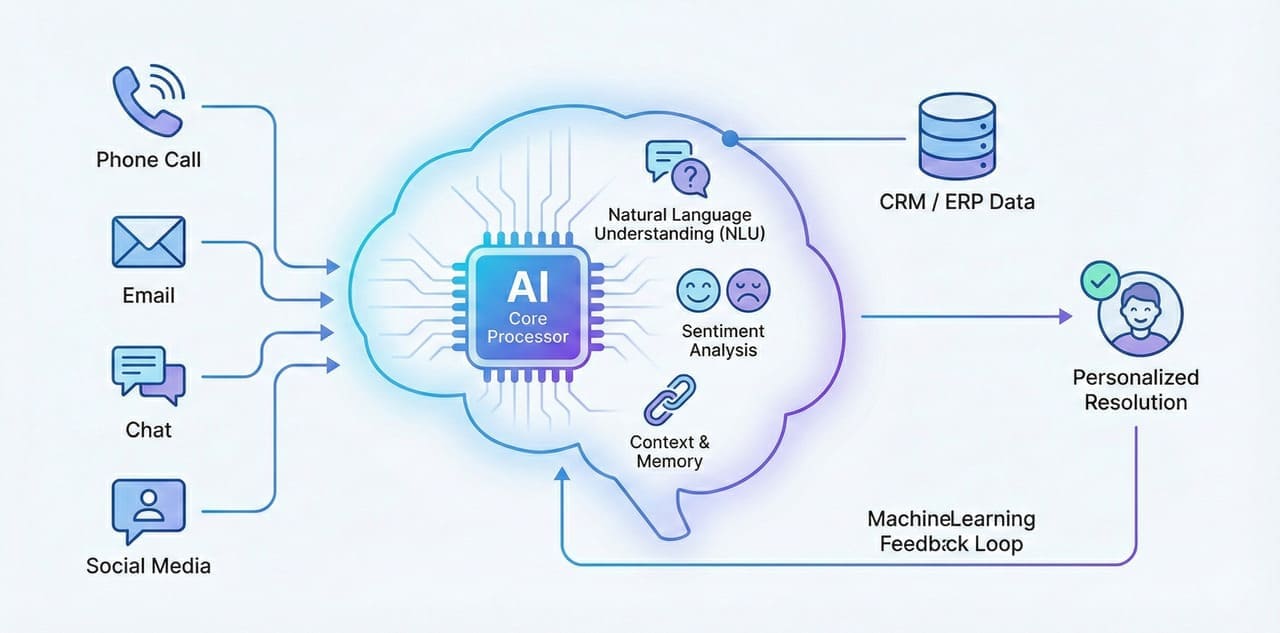
- Context and Sentiment Understanding: They analyze customer intent and the emotion behind the words. They detect frustration, enthusiasm, or confusion and adjust their tone and response accordingly.
- Multi-channel, Multi-step Conversation Management: An agent can begin a conversation on WhatsApp, continue it by email, and finish it with a phone call - while maintaining complete conversation history and context throughout. It remembers the previous session and knows exactly where to pick up.
- Real-Time Personalization: By connecting to the business's CRM and ERP systems, the agent accesses the customer's purchase history, preferences, and past interactions, offering solutions and services tailored specifically to them.
- Continuous Learning (Machine Learning): Every interaction feeds new information into the system. It learns which responses led to a closed deal, which solutions resolved issues efficiently, and how to handle new objections. It improves autonomously over time.
These agents are not just "employee replacements" - they are an upgraded version capable of performing tasks with the speed, accuracy, and scale that no human employee could match. Our guide to replacing employees with AI digital workers breaks down exactly how this works.
Chapter 3: Real-World Case Studies - AI in Action
The theory is compelling, but real-world deployments prove the revolution's power. Here are anonymized examples based on actual projects:
- Large telecommunications company: Deployed a voice agent that handles 60% of customer service calls. The agent identifies the customer, answers billing questions, performs basic troubleshooting, and even offers package upgrades to suitable customers. Average wait time dropped from 12 minutes to 30 seconds, and customer satisfaction rose by 15%.
- E-commerce fashion site: Integrated a smart bot serving as a "personal stylist." The bot asks customers about their style, upcoming occasions, and budget, then assembles complete outfit recommendations. Result: a 25% increase in average order value and a 40% drop in cart abandonment.
- Insurance company: Built an AI agent that handles small claims (such as lost luggage on a flight). Customers upload documents via an app, the agent validates them against data repositories, and in simple cases approves the claim and transfers payment automatically within minutes - a process that previously took days or weeks.
These examples illustrate how the technology doesn't just save money - it creates innovative customer experiences and generates real competitive advantage.
Want to consult with us?
We can help you choose, build and deploy the perfect AI solution for your business. Leave your details and we'll get back to you.
Chapter 4: The Economic Imperative - The Numbers Behind the Revolution
The shift to AI-powered automation is not a luxury - it's an economic necessity. The benefits go far beyond point-in-time savings:
- Dramatic ROI: The cost of developing and deploying an AI agent varies depending on complexity. But the annual savings from avoiding salaries, recruitment, training, benefits, and office space for a team of dozens of agents easily adds up to millions. ROI is often achieved in less than a year.
- Revenue Growth Engine: An AI agent is not just a cost center - it's a revenue engine. It operates 24/7, performs upselling and cross-selling, responds to leads immediately (dramatically increasing close rates), and enables the business to expand into new markets without building physical call centers.
- Strategic Data Asset: Every interaction is recorded and analyzed. This data is a gold mine, enabling deep understanding of customer needs, identifying product gaps, and forecasting market trends.
Chapter 5: Redefining Roles - The Future of Human Work in the AI Age
The fear of mass unemployment is natural, but history teaches us that technological revolutions don't eliminate work - they upgrade it. Repetitive roles will disappear, but new, higher-value roles will emerge. The human worker will shift from "executor" to "manager," "strategist," and "expert."
- AI Agent Manager: Human employees will oversee bot activity, analyze their performance, train them on new scenarios, and refine their capabilities.
- Complex Case Handler: AI will handle 80% of simple inquiries, allowing human agents to dedicate their full time and attention to the 20% of complex cases that require empathy, creativity, and human judgment.
- Conversation Designer: A new role combining psychology, copywriting, and technology - designing the bot's personality and conversation flow.
- AI Ethics Specialist: As AI becomes integral to business, people are needed to ensure its use is fair, transparent, and free from biases.
Chapter 6: How to Start - The Roadmap for AI Adoption in Your Business
The transition to a digital workforce requires strategic planning. Avoid common implementation mistakes and follow these steps:
- Start Small (Proof of Concept): Identify a single business process with high volume and low complexity (e.g., answering order status queries) and deploy a dedicated bot. Success on a small project generates organizational buy-in and delivers important insights for what comes next.
- Choose the Right Partner: Don't be tempted by cheap off-the-shelf solutions. Project success depends on choosing a company that specializes in developing custom AI solutions, understands your business needs, and knows how to connect AI to your existing systems.
- Prepare Your Data: The quality of your AI agent depends on the quality of the data it trains on. Ensure you have organized access to conversation history, support articles, and customer data.
The future is already here. Businesses that don't adopt the digital workforce risk losing relevance. This is not a question of "if," but of "when" and "how."
At WhaleBiz, we live and breathe the AI revolution. We specialize in building smart AI agents that become growth engines for our clients. If you're ready to take your business to the next level, streamline processes, and build a decisive competitive advantage - contact us today. We'd love to build your digital workforce together.
Frequently Asked Questions
How is a modern AI agent different from a bot with a simple conversation script?
Modern AI agents are built on Large Language Models (LLMs) and generative artificial intelligence rather than simplistic conversation scripts. They analyze customer intent and the emotion behind the words, manage multi-channel, multi-step conversations while preserving context, and connect to CRM and ERP systems to personalize their responses. On top of that, they improve autonomously over time through machine learning.
How long does it take to recoup the investment in deploying an AI agent?
According to the article, the cost of developing and deploying an AI agent ranges from tens to hundreds of thousands of shekels depending on complexity. The annual savings on salaries, recruitment, training, benefits, and office space for a team of dozens of agents easily reaches millions of shekels. As a result, return on investment (ROI) is often achieved in less than a year.
Does a digital workforce mean every human employee will be replaced?
No. The article explains that technological revolutions don't eliminate human work but upgrade it, with the worker shifting from 'executor' to 'manager,' 'strategist,' and 'expert.' The AI handles most of the simple inquiries and frees human agents to focus on the complex cases that require empathy and judgment. This also creates new roles such as AI Agent Manager, Conversation Designer, and AI Ethics Specialist.
What is the recommended first step for deploying an AI agent in a business?
The article recommends starting small with a Proof of Concept approach - picking a single business process with high volume and low complexity, such as answering order status queries, and deploying a dedicated bot there. Success on a small project generates organizational buy-in and delivers valuable insights for what comes next. At the same time, it's important to choose a partner that specializes in custom solutions and to prepare quality data for training the agent.

Michael Romm
Michael is the founder and CEO of WhaleBiz, leading business and marketing strategy. An expert in data (SQL, Python) and developing automation and AI solutions for businesses.