
Smart Survey Bot: Collecting Feedback That Drives Results | WhaleBiz
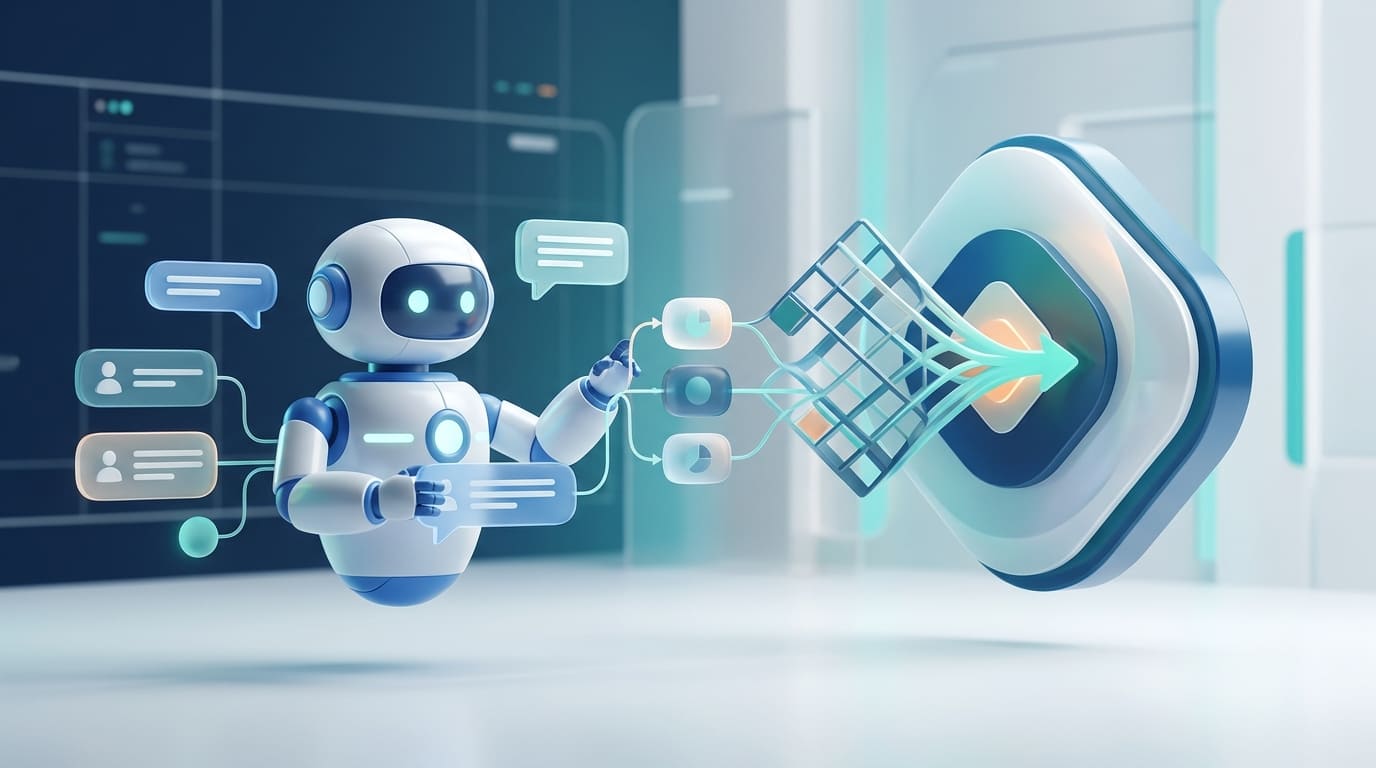
Smart Survey Bot: The Next Generation of Data Collection and Customer Understanding
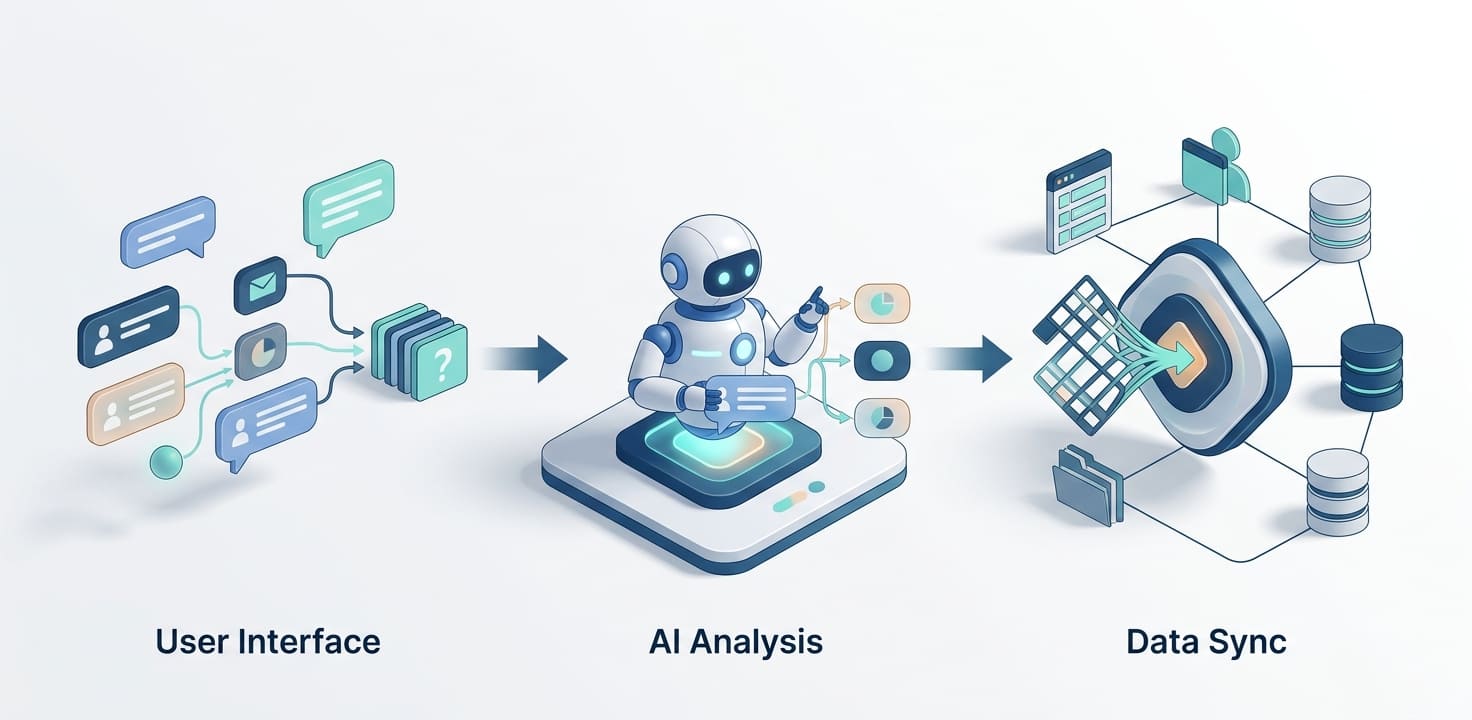
The bottom line is that moving to conversational, AI-based feedback technology is the single most significant leap a business can make to genuinely understand its customers. Instead of sending links to static, boring, context-free forms that customers tend to abandon, leading organizations now use dynamic systems that conduct a human, flowing dialogue. Such a system knows how to reach the customer at exactly the right moment, ask open-ended questions, respond in real time to their answers, and extract deep business insights. More importantly, every piece of information collected does not stay trapped in a disconnected file - it is fed automatically and instantly straight into the customer's record in the central management system. As a result, the business stops guessing what customers think and starts acting on precise data that improves the service experience, prevents churn, and increases profitability.
Now that we understand the essence, we need to dive into the complexity of the challenge companies face today. Every manager knows that information is the oxygen of a business. Without feedback from the field, it is impossible to improve products, identify bottlenecks in customer service, or spot emerging market trends. And yet, there is a vast disconnect between the critical need for information and the way companies try to collect it. Consumers today are bombarded with rating requests, long questionnaires, and tedious satisfaction surveys. Most of us elegantly ignore them, and the few who do bother to respond usually do so out of extreme frustration or unusual enthusiasm, which creates a distorted picture that fails to reflect the silent majority. The following article breaks down the failures of traditional methods and presents the technological architecture that changes the rules of the game and opens a window to truly effective communication.
The Psychology of Consumer Fatigue
To understand why traditional methods fail, we have to examine the user experience. When a person finishes a business interaction and receives a message asking them to rate the service from one to ten, and is then required to fill in long text fields, they experience cognitive overload. The process feels like a one-sided chore in which the business takes the customer's time without offering anything in return. This phenomenon is known in organizational research as respondent fatigue. The direct result is a dramatic drop in response rates, and often abandonment partway through the moment the user notices how many questions are still left.
The frustration grows when it comes to closed questions that leave no room for genuine expression. If a customer gives a low score because of a one-off delivery delay but loved the product itself, a dry numerical score will not reflect that. The statistic will point to general dissatisfaction, and management will make wrong decisions based on data that lacks resolution.
This is where modern natural language processing technology comes into play. Adding a high-quality survey bot changes the dynamic from end to end. The system does not command the customer to fill out a form - it opens a relaxed conversation. It lets the customer express their opinion in free-form sentences, exactly as they would when messaging a friend. The ability to listen digitally, understand the nuances of language, and respond with empathy makes the customer feel that their opinion genuinely matters and is valued.
Dynamism and Flexibility in Real Time
The clear advantage of a conversational AI-based system lies in its adaptability. A traditional questionnaire is static. The order of questions is set in advance, and everyone follows the exact same path. A smart system, by contrast, responds in real time to the answers it receives and changes the course of the conversation accordingly.
Let us examine a sample scenario:
The customer is asked about their purchase experience at the branch and replies that they faced a long wait at the checkout.
In an outdated system, the next question might have been "How satisfied were you with the cleanliness of the branch?". That is digital tactlessness that only amplifies the frustration.
In an AI-based system, the algorithm immediately recognizes the dissatisfaction and frustration and halts the planned sequence of questions. The system will respond with understanding: "I am truly sorry to hear you had to wait so long. Could you tell me exactly what time you were at the branch so we can raise this with the shift manager?".
The ability to drill into the problem at a granular level, show empathy, and pull concrete data in real time makes the customer experience far better. The customer feels there is someone listening to them, and the organization receives remarkably accurate information from which it can derive operational actions for improvement.
This flexibility is not limited to written text. For certain audiences, adding a voice agent can take the experience a step further. Customers who prefer spoken communication can receive a courteous, natural call in which they share their feedback out loud, while the system transcribes, analyzes, and documents the insights with precision.
The Structural Solution: Why a Full Platform and Not Just a Feature?
The market offers no shortage of tools that promise solutions for collecting feedback. However, many companies discover that adding an external tool creates new problems. When the collection tool is disconnected from the central customer management system, you end up with islands of information cut off from one another. The result is that service and sales staff are unaware of the customer's feedback history when they speak with them, and company management is forced to export data and sync files in a manual, cumbersome way.
Based on accumulated experience processing over half a million messages and interactions, we at the WhaleBiz team of experts arrived at a decisive insight: the real problem is not in the customer-facing user interface, but in the organizational infrastructure that receives the data. The legacy customer management systems on the market were built in an era when humans typed in the data. They are not built to hold the enormous stream of insights, sentiment analyses, and conversation summaries generated in real time by artificial intelligence.
This gap led us to develop the innovative approach of a customer management platform built from the ground up for digital employees. We created a work environment in which the smart agents are the primary users. They are the ones who manage the conversation with the customer, analyze the soft data, identify trends, and update the records in a fully automated way. Instead of a human team wasting entire days reading and tagging survey responses, our system performs all the grunt work behind the scenes and presents management with a clear, analyzed, action-ready picture.
A note on the side: when all the data flows into a single smart system, the ability to connect the dots grows. If a customer complained about product quality, the system can automatically pause upsell campaigns targeting that customer while simultaneously triggering an urgent task for the customer retention department.
Open Integration and World-Class Data Security
We understand that organizations do not operate in a vacuum, and that many of them have already invested enormous resources in deploying core enterprise systems and various management software. Asking a business to abandon its entire IT infrastructure in favor of a new solution is usually unreasonable. That is why the philosophy at the foundation of our development is one of complete architectural openness.
We built our platform as a flexible technological bridge. We provide open development interfaces that allow you to connect our advanced capabilities to any existing system you already work with. The data flows smoothly and securely in both directions. Our system can pull historical information about the customer before reaching out to them, and then update the relevant fields in your external system without any human touch.
Of course, when it comes to customer data, security is a critical, uncompromising matter. Collecting personal information requires compliance with strict regulations and airtight protection of customer privacy. As part of Amazon's cloud giant startup program and as official technology providers for the Meta corporation, we are subject to the most stringent international standards of cyber security, security resilience, and privacy. We use exclusively official connections, without relying on technological workarounds that put business data at risk or expose the business to sudden blocks.
Want to consult with us?
We can help you choose, build and deploy the perfect AI solution for your business. Leave your details and we'll get back to you.
Preventing Misinformation and Achieving Absolute Organizational Accuracy
One of the central concerns raised by managers evaluating the adoption of advanced language tools is the fear of receiving inaccurate answers or conclusions. When language models rely on open information sources from the internet, there is a danger that they will fill knowledge gaps by generating plausible but incorrect information. In the business world, giving a customer wrong information or drawing mistaken conclusions from data can cause severe reputational and financial damage.
To ensure absolute reliability, the process of building an AI agent at our company is accompanied by the implementation of rigid grounding mechanisms. Our systems are not permitted to search for answers in the public space of the web when conversing with your customers. They are restricted exclusively to the specific knowledge base you approve. Your service catalog, your internal procedures, and your company policy are the only boundaries.
If an issue arises that is not covered in your organizational documents, the system is programmed not to attempt to guess or fabricate a solution. Instead of embarrassing mistakes, the system will courteously announce that it does not have the full information and hand the inquiry off to a relevant human for further handling. This principle ensures that your operation always remains grounded, safe, and a faithful representation of the organization.
Use Cases and Business Applications
The power of the system lies in its versatility. The dialogue and analysis capabilities can be applied to a wide range of organizational goals, well beyond standard post-purchase feedback collection.
Market Research and Product Development
Organizations looking to launch a new service or improve an existing product need a deep understanding of their target audience. Running the system makes it possible to reach thousands of consumers, present ideas to them, and hear their candid opinions. Analysis of the open text identifies keywords, recurring frustrations, and needs that competitors are not meeting. Management receives a verbal heat map that pinpoints exactly where the next development budget should be invested.
Employee Retention and Organizational Health
An organization's internal information is no less valuable than its external information. HR departments often contend with employees' reluctance to engage with periodic questionnaires. When a survey bot chats with employees anonymously and casually, asking about the work environment, the tools available to them, and workload levels, the result is a far more reliable picture. Management can identify employee burnout early and prevent the loss of top talent.
Customer Conferences and Business Events
After a professional conference or company event, it is important to collect insights from participants while the experience is still fresh in their minds. Instead of handing out feedback sheets or sending forgettable emails, the system can reach out to them immediately when the event ends, find out what they liked more and what they liked less, and automatically tag customers who expressed interest in further commercial engagement as a result of the conference.
Comparison Table: Traditional Tools Versus the WhaleBiz System
To simplify the vast differences between the approaches, we have gathered the key comparison points for you in the following table:
| Evaluation Parameter | Static Questionnaires (Standard Forms) | Smart Conversational System by WhaleBiz |
|---|---|---|
| Engagement and response rates | Low, suffering from rapid abandonment due to visual overload | Significantly higher thanks to a gradual, natural, conversational approach |
| Path flexibility | A rigid path, all customers are asked the exact same questions | A dynamic path that changes and adapts itself in real time based on the answers |
| Depth of insights | Usually shallow, based mainly on closed numerical metrics | Deep and detailed, sentiment analysis from free-form human text |
| Updating organizational systems | Requires data exports and time-consuming manual sync operations | Automatic, instant sync straight into the customer's record in the organization |
| Edge-case handling | No response, a frustrated customer finishes the form without a solution | Immediate detection of frustration and handoff of the conversation to urgent human handling |
Something to think about: collecting data is not the goal, it is the means. If the information collected sits as a useless relic in an Excel file, it has no business meaning. The system is designed so that the information immediately becomes an active action, such as changing a status, creating an alert, or pausing marketing to a frustrated customer.
Answers to Frequently Asked Questions from Business Owners and Organizations
Adopting advanced AI-based technologies often raises important questions among management. We have gathered here professional answers to several questions that come up frequently while scoping systems for our clients.
How does the system manage to handle users who use slang or make spelling mistakes?
This is one of the most prominent advantages of modern natural language processing models. Unlike outdated systems that relied on exact keyword matching, today's technology focuses on understanding the user's intent. The models were trained on vast amounts of text and know how to ignore typos, correctly interpret everyday slang, and even understand abbreviations, so the customer is never required to correct themselves just so the machine can understand them.
Can we predetermine the hours during which the system is allowed to reach out to customers?
Absolutely. Controlling the timing is an integral part of business etiquette and proper communication. You can define precise time windows during which the system is permitted to initiate conversations, set rest days and holidays, as well as waiting rules (for example, waiting 24 hours from the moment a delivery is received before reaching out to the customer). In addition, the system honors requests to stop contact immediately and automatically.
Does the system recognize customers who return to it after a long period of time?
Of course. Because our infrastructure operates as a complete customer relationship management system, its memory is not erased when a conversation ends. If a customer reaches out to you or receives an outreach months after the previous interaction, the digital employee will be familiar with the conversation history, will know which products the customer was interested in before, and will be able to refer to that in the new conversation. This long-term memory creates a sense of familiarity and strengthens brand loyalty.
How complicated is it to maintain and update the questions and procedures in the system?
The management interface we built is designed to let management, marketing, and customer service teams operate the system without any need for programming expertise. Updating procedures, changing the nature of the questions, or adding new products to the database is done by entering plain, simple texts in free language. The system analyzes the new documents and immediately adapts itself to the updated requirements.
Is the solution worthwhile economically for medium or small organizations as well?
The operating costs of these technologies have dropped significantly in recent years, and the business models today are usually based on usage or subscription fees, which makes them accessible. When you factor in the many hours of human work saved each month, the reduction in customer churn as a result of fast handling of dissatisfaction, and the immense value of accurate information, the return on investment (ROI) is fast and proven for organizations of every size.
Organizations that ignore the true voice of their customers operate in a fog. Relying on gut feelings, or on outdated forms that earn meager response rates, is a dangerous business strategy in a world that changes fast. The technology that makes it possible to collect, analyze, and act on soft data in free language already exists today, and it is available for rapid deployment.
Collecting genuine feedback and improving data quality should not be an operational headache, and your customers should not feel that they are working for you. At WhaleBiz, we created a technological work environment in which communication flows, insights are precise, and all the organizational systems talk to one another in perfect sync. If you understand the value of quality data and are ready to upgrade the customer and employee experience in your organization, we invite you to leave your details here on the site. Our professional team will be glad to hold a scoping meeting with you and demonstrate how a smart platform can become your next growth engine.

Eva
Eva is the Events and Community Manager at WhaleBiz, leading community engagement, webinars, and professional industry events. Combining a background in behavioral sciences with digital strategy and SMM, she creates high-impact experiences and drives brand presence across social platforms.