
AI Voice Agent vs Call-Center Agent: Cost and ROI
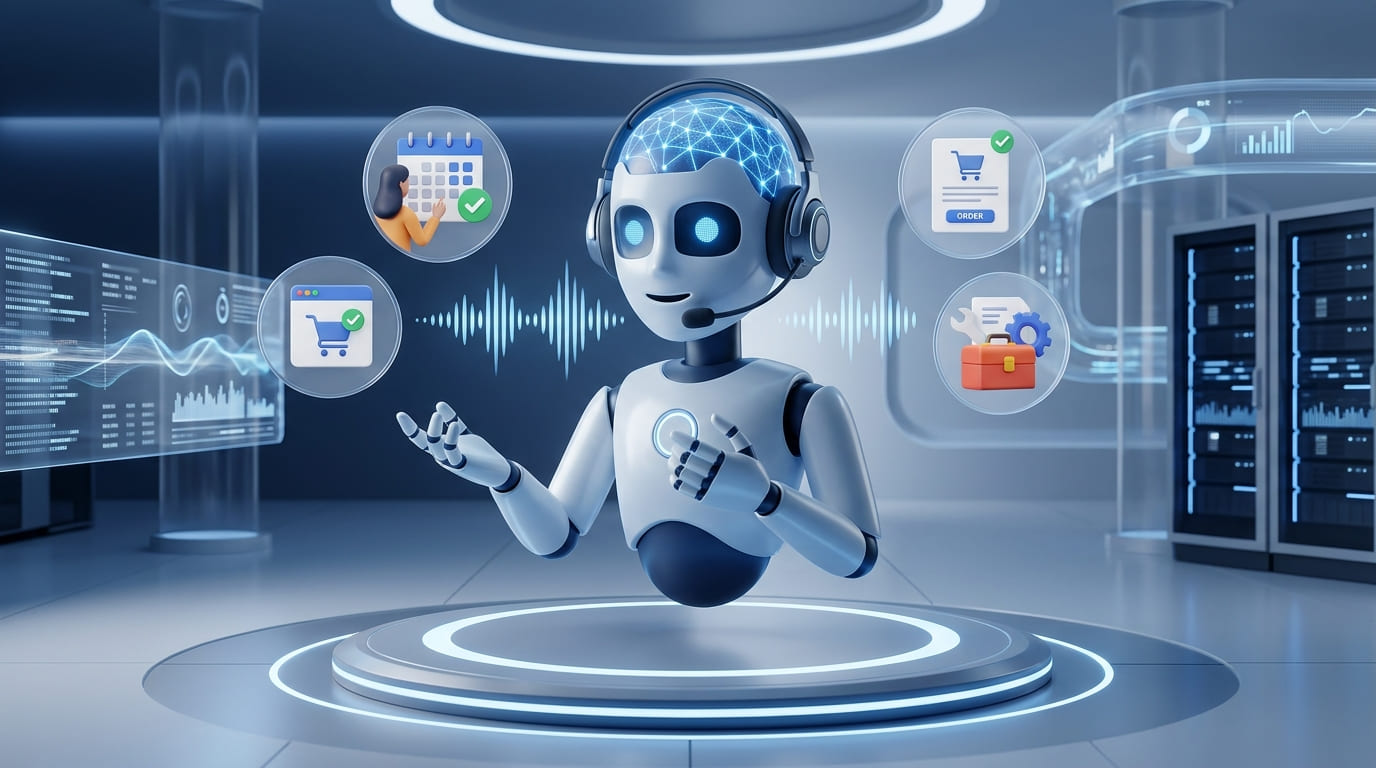
Next-Generation Voice Bot: An AI-Powered Voice Agent by WhaleBiz
In today's fast-moving business world, real-time customer service and sales are no longer a luxury - they are a baseline requirement. Customers are not willing to wait long minutes on hold, listen to exhausting hold music, or struggle with outdated call-routing systems that force them to press keys to reach the right person. The most comprehensive and effective solution to this challenge is a smart system that can hold a fully natural conversation, understand the customer's intent, and take immediate action. Unlike partial solutions that only frustrate the customer, moving to an AI-powered voice agent allows businesses to deliver service that is human, precise, and fast, twenty-four hours a day, seven days a week.
For managers and business owners, the implications are dramatic. Instead of pouring enormous resources into recruiting, training, and retaining human call-center agents who face constant burnout, you can rely on a technological infrastructure that solves problems in real time. The technology pulls data from your business systems, updates it back, and closes service loops without the customer being passed from one agent to another. Following the inverted-pyramid approach, we present the bottom line first: this infrastructure saves money, increases sales, and improves satisfaction to an unprecedented degree. For the full technical picture, see our comprehensive guide to voice AI agent technology. Now, let's expand on every aspect that makes up this revolution.
The Root of the Problem: Why Traditional Service Centers Collapse
Many businesses experience growth, only to discover that growth brings serious operational difficulties. Successful marketing campaigns drive thousands of leads and inquiries, but the human team's ability to absorb the flood of calls is limited. When dozens of calls come in simultaneously, bottlenecks form inevitably. Wait times stretch out, agents respond under pressure, and human error becomes a common occurrence.
What is more, a significant share of inbound calls deal with trivial, repetitive questions: checking opening hours, shipment status, scheduling or canceling an appointment, and inquiring about an outstanding balance. The burnout among employees who have to answer the same questions dozens of times a day is high, which leads to heavy staff turnover and steep recruitment and training costs.
When a customer does not get a quick response, the consequences are immediate: they simply hang up and dial a competitor. Every dropped call is a potential lost revenue or an existing customer building up frustration. This reality demands a systemic solution that does not merely rely on adding more human headcount, but on smart automation that genuinely works.
From Understanding to Execution: The AI-Native CRM Solution
The market is flooded with various tools that promise automation, but most of them suffer from a serious structural problem: they operate in a vacuum. When you try to deploy an automated tool that is disconnected from the business's core systems, the result is disorder, duplicated information, and a frustrated customer who has to repeat their details over and over. The classic CRM systems already on the market were simply never designed to work alongside fast AI tools; they were built for people who key in data manually.
To solve this structural failure, the WhaleBiz platform was built from the ground up as an AI-Native CRM. This means the system was designed so that the AI agents are its primary users. They are the ones who meet customers, manage conversations, transcribe them in real time, produce accurate summaries, open new customer records, and update statuses according to the course of the conversation.
Technical note: Unlike generic off-the-shelf solutions, building an AI-Native system allows agents to run lightning-fast queries to check inventory, calendars, or payment statuses while the customer is still speaking, and to retrieve the answer as part of the immediate voice response.
Full Integration with Existing Systems
Not every business can replace its entire computing infrastructure in a single day. Many businesses rely on heavy ERP systems, traditional accounting software, or existing CRM systems. For this reason, our platform is based on a fully open API approach.
We serve first and foremost as the central platform for managing your AI agents, but we enable smooth, simple connection to any existing system you already work with. The AI agent can pull data from one system, manage the conversation with the customer, and update the results in another system (for example, read details from Priority and update Salesforce). It all happens in the same breath, behind the scenes, in perfect sync that prevents operational breakdowns.
Reliability and International Standards
In the business world, there is no room for compromise when it comes to data security and privacy. As an official Meta Tech Provider and as participants in the AWS for Startups program, we are committed to meeting the highest standards of reliability and technology. The solutions we provide rely solely on official, secure development interfaces (APIs). There are no risky workarounds, no illegal scraping, and full compliance with the strictest privacy standards.
How Does the Voice Technology Actually Work?
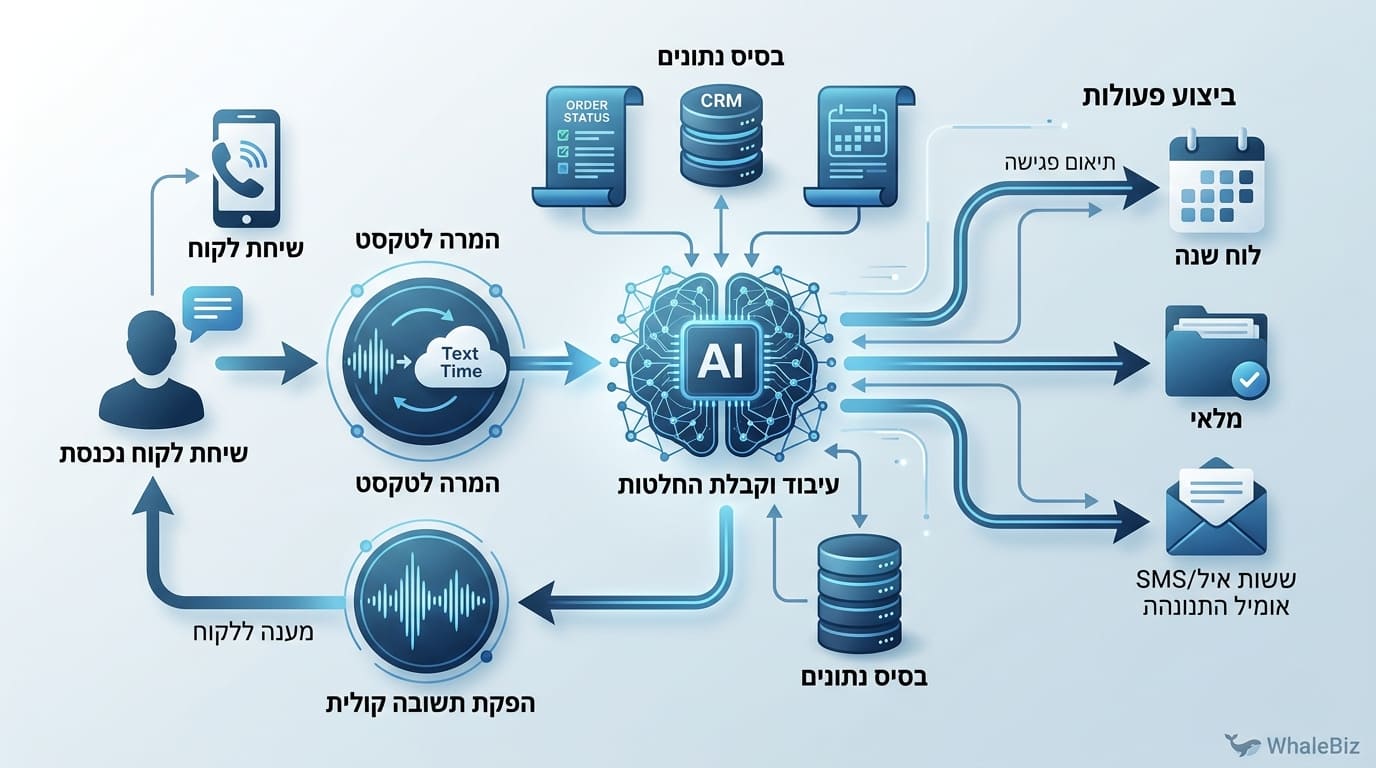
To produce a conversation that feels natural and flowing, you need precise orchestration of three different core technologies, all of which must operate in less than a single second:
- Speech recognition and conversion to text: When the customer speaks, the system captures the audio. It filters out background noise from traffic, wind, or children in the background, and copes with a wide range of speaking styles, speech patterns, and accents. The system converts the audio to text at a critical level of accuracy.
- Language processing and business logic: The text passes to the language engine, which analyzes the customer's true intent. Even if the customer expresses themselves clumsily or in fragmented sentences, the system identifies the context from the business's data stores and formulates a response based on real data rather than guesswork.
- Natural voice generation: The text response is converted back into spoken audio. The new voices include natural intonation, subtle breaths, and pauses in speech, so that customers are sometimes surprised to discover they are not speaking with a flesh-and-blood person.
A Wide Range of Business Applications and Roles
The true power of the system lies in its ability to adopt different "professional identities" within the organization. For each agent, we define its job description, its boundaries, and its access to the information relevant to it.
Intelligent Appointment Scheduling
Booking appointments is one of the most time-consuming tasks. When the system is configured to handle calendars, it performs with high efficiency, just like an AI secretary with full, direct access to your calendar. When a customer needs to schedule an appointment, they call in, the system checks calendar availability in real time, suggests suitable dates, completes the booking, and sends an automatic confirmation message. If the customer asks to change or cancel, the action is carried out immediately, and the slot opens up for the next customer.
A Proactive Outreach and Sales Operation
Handling cold or new leads requires a fast response. Instead of having your sales team chase customers who do not answer, our system can make outbound calls. It acts as a kind of AI sales agent that makes first contact with prospects just seconds after they leave their details in a campaign. The agent clarifies needs, gauges readiness, filters out irrelevant inquiries, and schedules a follow-up call or a Zoom meeting with your senior salesperson only for the hottest leads.
Technical Support and Ongoing Service
E-commerce, shipping, and support businesses field hundreds of identical questions every day. The system can identify the caller by phone number, access the shipping or ERP system, and provide a full status update on their order without the call ever reaching a human agent. If an unusual issue is detected, the system knows to transfer the call to the human team along with a full summary of the inquiry handled so far.
Want to consult with us?
We can help you choose, build and deploy the perfect AI solution for your business. Leave your details and we'll get back to you.
Tackling the Reliability Challenge: Zero Mistakes
One of the central barriers that keeps managers from adopting automated solutions is the fear of fabricated data. In open models, the system may "fill in" missing information in a way that is creative but wrong. In a business context, a wrong answer can lead to reputational or legal damage, and presenting mistakes to customers is simply out of the question.
We solve this issue through a rigid architecture of data grounding (Grounding / RAG). Our agents do not search for answers across the open internet; they access only your business's closed, secure database - the catalog, the procedures, the returns policy, and the specific customer's data. The rule embedded in them is simple: if the information does not exist in your repository, it must not be invented. In such a case, the agent will apologize politely, state that it does not have the requested information, and hand the inquiry over to a qualified human representative.
Something to Think About: The reliability barrier is eliminated entirely when you maintain airtight control over the information sources. You are the ones who set the basket of answers and the system procedures, exactly as you would write a procedures manual for a new employee on their first day at the company.
Performance Comparison: Human Management vs. Digital Infrastructure
To illustrate the vast difference between outdated operations and adopting smart infrastructure, we have prepared a detailed comparison of the parameters critical to running a business:
| Operational parameter | Traditional human call handling | The WhaleBiz AI platform |
|---|---|---|
| Wait times and availability | Heavy loads at peak hours, closed on weekends and nights | Zero wait time, 24/7 availability with no exceptions |
| Concurrent call capacity | Absolutely limited to the number of agents on shift | Dynamic expansion (Scale) to handle hundreds of calls simultaneously |
| Documentation and data entry | Requires manual typing, prone to forgetting and delays in updating the system | Fully automatic: transcription, summary, and direct, immediate entry into the record |
| Service consistency | Depends on the mood, experience, and knowledge of the specific agent | Complete consistency, aligned with procedures, with no deviations and no burnout |
| Operating costs (ROI) | High fixed expenses on salary, insurance, equipment, and turnover | Flexible, predictable payment, a dramatic saving compared to the cost of an employee |
A Shift in Mindset: The Machine Empowers the Human
It is important to clarify that deploying this technology is not meant to remove the human touch from the business, but to make it more premium and more effective. In many businesses, the service team collapses under a burden of administrative inquiries and trivial questions. When most routine inquiries are handled quietly and automatically behind the scenes, your human team is freed up to deal with what truly generates value: retaining strategic customers, handling crises that demand deep empathy, and managing complex business negotiations. The work mix shifts from firefighting to proactive, growth-driving activity.
Frequently Asked Questions (FAQ) About the Infrastructure and the Agents
To put common concerns to rest, we have gathered answers to the questions that frequently come up from managers and business owners considering a move to our infrastructure.
How does the system handle a customer who interrupts or cuts into the conversation?
Our advanced voice technology is built to manage a dynamic conversation. If the digital agent is speaking and the customer cuts in to correct it or add information (for example: "Hold on, I didn't mean tomorrow, I meant Tuesday"), the system detects the interruption, stops speaking immediately, processes the new information, and adjusts the course of the conversation accordingly. This feature is critical to creating the feeling of a conversation with an attentive human.
Can you control the tone and personality of the digital agent?
Absolutely. We believe every brand is a world unto itself. During the initial scoping, we define the agent's "persona." You can choose whether its voice is male or female, select the pace of speech, and set the degree of formality. A lawyer will prefer a voice bot with an authoritative, formal tone, whereas a young fashion brand can define a casual, energetic, down-to-earth speaking style.
What is the deployment process, and what is required from us as the business owner?
The process is designed to be smooth and simple for you. Since our dedicated CRM is already up and running, the bulk of our work is in the learning stage. You provide us with your data stores (frequently asked questions and answers, procedures, catalogs, links to existing systems). We train the model, set up the necessary connections through the API, and run comprehensive simulations. Within a few weeks the system goes live, without you having to write a single line of code.
Is the solution suitable for small businesses too, or only for corporations?
This is one of the great advantages of our infrastructure. We have built flexible models that suit both a solo professional who needs phone coverage for scheduling appointments, and large companies that need to manage thousands of simultaneous calls with team segmentation, advanced RAG capabilities, and complex analytics reports. The system grows and knows how to scale (Scale) together with your business.
How do you make sure customers are satisfied with the conversation?
The system includes fully transparent analytics mechanisms. You, as managers, can log into the interface, read full transcripts of the conversations, see where the conversation ended successfully (for example, an appointment booked or a deal closed), and listen to recordings. This transparency lets us and you carry out constant optimization, change procedures, and ensure that the level of service stays at the highest standard.
Is an AI-powered voice agent really cost-effective compared to a call-center agent?
Unequivocally yes. The cost of maintaining a human call-center agent includes base salary, benefits, vacation and sick days, workstation and equipment costs, and management and training time. Our infrastructure, by contrast, is provided on a subscription or usage-based model, which is a fraction of the cost of a regular employee. What is more, when you calculate the return on investment (ROI) from leads that are no longer lost at night and on weekends, the solution effectively pays for itself and generates net profit for the business from the very first month.
The reality today is clear: businesses that keep relying on manual processes, limited operating hours, and frustrating call-routing systems will find themselves left behind. Adopting smart infrastructure that lives and breathes your business information is the most strategically sound decision for ensuring steady growth and a competitive edge.
We invite you to stop settling for partial solutions and take your communications operation to the next level. Leave your details on the website, and our team will get in touch with you shortly to explore together how our technology can fit precisely into the unique needs of your business.

Michael Romm
Michael is the founder and CEO of WhaleBiz, leading business and marketing strategy. An expert in data (SQL, Python) and developing automation and AI solutions for businesses.