
What is Business Automation? The Quiet Revolution of Businesses | WhaleBiz
What is Business Automation? The Key to Growth in the Data Science Era
In today's business world, the term "automation" is thrown around in almost every board meeting or strategy discussion. But few truly understand the depth, potential, and vast difference between a "dumb bot" and smart systems based on data models. If you came here to understand what business automation really is, the short answer is: it's the use of technology to perform repetitive tasks or processes without human touch, aiming to free up human capital to focus on what truly matters - strategy, creativity, and business development.
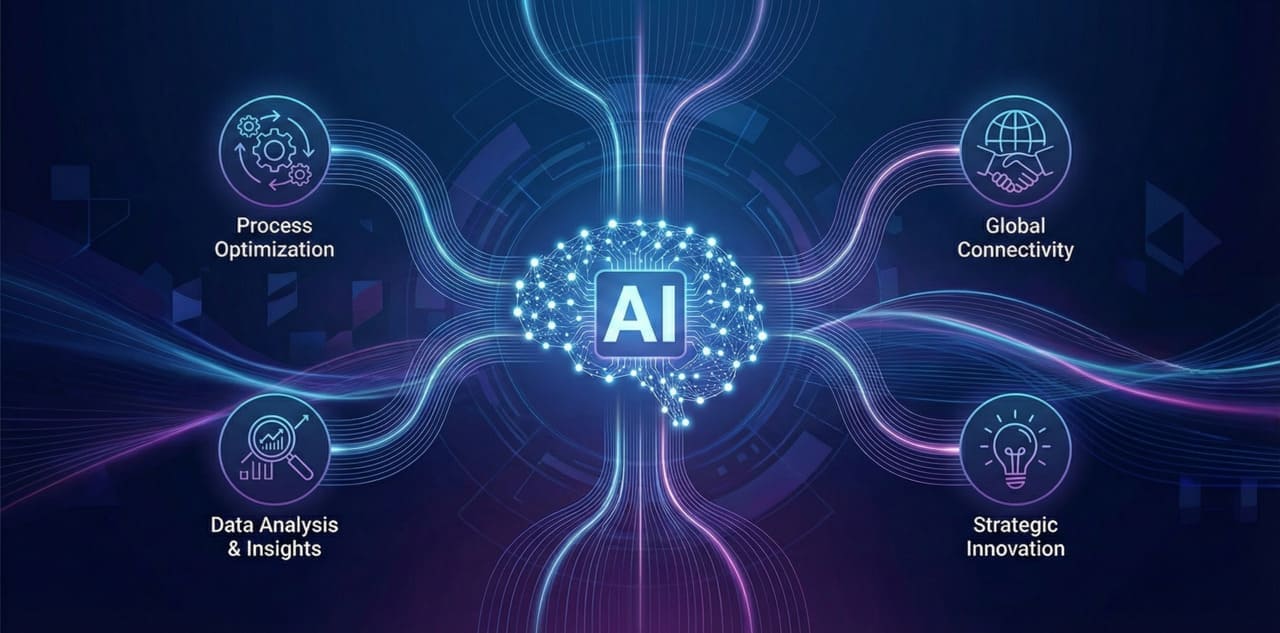
But that's just the tip of the iceberg. In an era where Artificial Intelligence (AI) and Data Science are not just buzzwords but engines of growth, automation has transformed from a technical tool into a critical competitive advantage. It's no longer just about forwarding emails automatically; it includes AI agents that understand natural language, analyze data in real time, and make decisions.
The Core of Automation: Way Beyond Saving Time
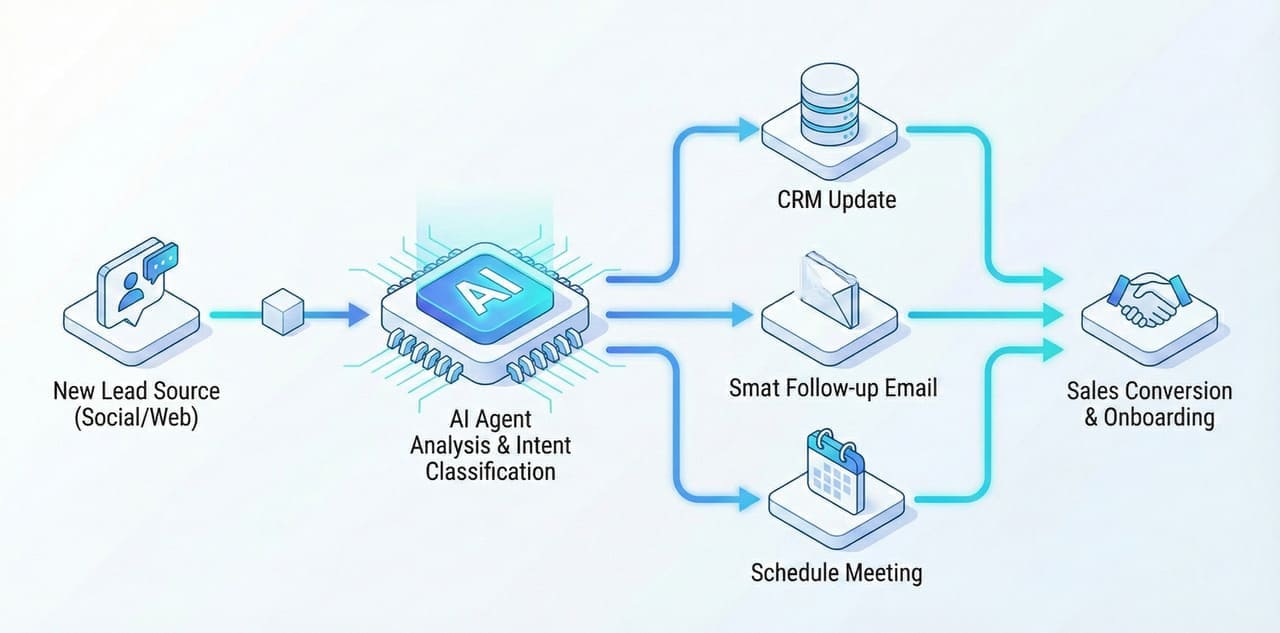
When we at WhaleBiz are asked what automation is, we tend to look at it through the lens of operational efficiency and data accuracy. At the most basic level, business automation takes a manual process - for example, entering a lead from Facebook into a CRM - and turns it into an action that happens in a fraction of a second behind the scenes.
However, the modern definition is much broader. It deals with the orchestration of entire systems. Imagine an orchestra where every instrument (marketing system, accounting, customer service) plays at the exact right moment, without a human conductor needing to signal them when to start.
Food for thought:
Most businesses lose money not because their product is bad, but because of "friction" in processes. A lead that waited two hours for a response, an invoice that wasn't sent on time, or information that was lost between departments. Automation is the oil that eliminates this friction.
The Evolution: From Simple Scripts to AI Agents
To deeply understand what business automation is in the 2026 model and beyond, one must understand the technological evolution. In the past, automation was based on rigid "If This Then That" rules. If a customer sent an email -> send them a generic response.
Today, thanks to the capabilities we at WhaleBiz bring from the worlds of Data Science, automation has gained a "brain." We're not just talking about technical connections, but about understanding.
This is where AI agents come into play. Unlike old and frustrating bots, an AI agent (such as a sales agent or support agent) knows how to:
- Understand the user's intent (Intent Analysis).
- Retrieve relevant information from the organization's databases (using RAG technology).
- Perform a complex action in the organization's systems.
Types of Business Automation: Where Does It Meet Your Business?
The world of automation is divided into several layers, each requiring a different level of expertise and technology.
Marketing Automation
Marketing automation is perhaps the most familiar field. The goal is to accompany the customer on their journey in a personalized way. It's not just "automated mailing," but building smart customer journeys based on behavior.
For example: A customer showed interest in a specific product on the website but didn't purchase? The system will identify this, send them relevant value-added content (not just a coupon), and update the AI sales agent to contact them if the customer returns to the site.
Business Process Automation (BPA)
Here we enter the guts of the organization. Operational automation systems ensure that nothing falls between the cracks.
- Automatically generating invoices and receipts upon closing a deal.
- Managing inventory and purchase orders when inventory reaches a certain threshold.
- Employee onboarding - creating users, sending contracts, and scheduling orientation meetings without HR intervention.
AI-Driven Automation
This is our specialty at WhaleBiz. Here, automation meets data analysis. It's not just performing an action, but performing it smartly.
For example, a lead-capturing consultant agent that doesn't just ask for a name and phone number, but conducts a conversation, understands the customer's needs, classifies the lead by maturity level ("hot," "warm," "cold"), and enters it into the CRM only when it's ready for sale.
Want to consult with us?
We can help you choose, build and deploy the perfect AI solution for your business. Leave your details and we'll get back to you.
Why Must Businesses Automate to Survive?
The question of what business automation is must be accompanied by the question "why do I need it?". The answer lies in the numbers. Businesses that implement smart automation processes report dramatic improvements in several critical metrics.
Saving Resources and Reducing Human Error
How much does an employee typing data manually cost you? And beyond the salary, how much does a mistake cost when they type the wrong digit in an email address or transaction amount? Computerized systems don't get tired, don't take lunch breaks, and don't make typos. They work 24/7 with absolute precision.
Scalability - The Ability to Grow
A business based on manual processes will struggle to grow. If the number of leads doubles, will you have to double the number of salespeople? In an automation and AI agent-based business, the answer is no. A single AI support agent can manage a conversation with 10 customers or 10,000 customers simultaneously, with the same level of service and courtesy.
Improving Customer Experience
We live in an era of instant gratification. A customer who contacts a business and receives an "we'll get back to you within 2 business days" answer is a lost customer. Automation allows an immediate, relevant, and personalized response, which significantly improves satisfaction and brand loyalty.
The Difference Between "Just a Bot" and a WhaleBiz AI Agent
It's important to clarify a critical point. The market is flooded with "automation" solutions that are actually band-aids. Chatbots based on primitive decision trees ("Press 1 for sales") are a thing of the past and mostly frustrate your customers.
Our approach is different. We come from the worlds of Data Science. This means our solutions are based on a deep understanding of data.
What Makes Our Agents Next-Generation?
- Context Understanding: The agent remembers the customer's history. It knows the customer asked about the price a week ago, and now they're back to ask about the warranty.
- Deep Integration: Our agents don't work in a vacuum. They are connected to CRM systems, inventory, and organizational calendars. An AI office manager can schedule a meeting in the CEO's actual calendar, not just send a request.
- RAG (Retrieval-Augmented Generation): We build systems that know how to "read" your organizational knowledge (procedures, catalogs, trouble history) and use it to provide accurate answers, rather than inventing information (AI hallucinations).
| Feature | Traditional Automation (Old School) | Smart Automation (WhaleBiz AI) ✓ |
|---|---|---|
| Flexibility | Low (only works according to predefined rules) | High (learns and adapts to the situation) |
| Communication | Robotic, templated, and limited | Natural language, flowing, and human |
| Information Handling | Transferring data from place to place | Analyzing data and generating insights |
| Complexity | Suitable for simple linear tasks | Suitable for complex processes and decision making |
The Process of Implementing Business Automation: How Does It Actually Happen?
Many ask what automation is at the implementation level. Does it require replacing all software in the business? The answer is no. The trick is to connect the existing systems.
The Mapping and Characterization Stage
Before writing a single line of code or connecting an API, we perform an in-depth analysis. We map the "bottlenecks" in the business. Where do customers drop off? Where do employees waste time? Is it in the initial response? Issuing the quote? Scheduling meetings?
Development and Integration
At this stage, our team of experts builds the system. We use advanced tools to connect organizational systems (ERP, CRM, Marketing Tools). If necessary, we develop unique AI models adapted to your language and products. This is the stage where automation systems turn from an idea into a working reality.
Implementation and Testing
An AI agent, smart as it may be, needs to be trained. We run simulations, test edge cases, and ensure the agent "behaves" according to the tone and style of your brand.
Important to remember:
Automation is not "fire and forget." It's a living, breathing process. The data collected by the agents (what customers ask, what they complain about) is used by us to constantly improve and refine the models.
Advanced Applications: Beyond the Standard
When we're asked what business automation is for advanced organizations, we're talking about Enterprise Made solutions.
- AI Sales Agent: No more boring "contact us" forms. An agent that conducts a full sales conversation on WhatsApp or the website, handles objections, presents examples, and ties up loose ends until scheduling a call with a human salesperson for a final close (or closing it itself).
- AI Office Manager: A system that manages the organizational schedule, coordinates meeting rooms, orders office supplies when they run out, and manages internal communication.
- Developing Complex RAG Systems: Imagine a support agent that has access to all the manufacturer's vehicle manuals, and knows how to guide the mechanic (or customer) in solving a specific fault in a specific model, within seconds.
Frequently Asked Questions (Q&A)
Will automation replace my employees?
This is one of the most common questions when exploring business automation. The answer is that automation is designed to replace tasks, not people. It frees employees from tedious, mundane work and allows them to focus on management, personal relationships, and solving complex problems that machines cannot yet solve.
Is this only for huge organizations?
Not at all. In fact, medium and small businesses have the most to gain. Automation allows a small business to provide corporate-level service without needing a massive workforce.
How long does it take to implement such a project?
It depends on the complexity. Implementing a basic AI agent can take just a few weeks, while developing a full enterprise automation system with complex integrations can take several months. The key is to start with things that provide the greatest value in the shortest time (Quick Wins).
What is the difference between you and other digital agencies?
We at WhaleBiz are not a classic digital agency. We come from the technological core of Data Science. We don't just connect cables; we build the brain of the system. Our ability to analyze natural language and build learning models is what differentiates automation that breaks every two days from a stable system that yields results.
The Future is Already Here
You've understood what automation is and realized your business cannot afford to be left behind. The gap between businesses adopting AI agents and those sticking to manual forms grows every day. Your customers expect it - they want fast, accurate answers and 24/7 service availability.
Our knowledge in building models and analyzing data, along with deep business understanding, allows us at WhaleBiz to create your next "outstanding employee" - one that never sleeps, never forgets, and is always polite.
Don't let your competitors overtake you with superior technology. Our team is ready to analyze your needs and tailor AI agents that will turn your business into a well-oiled, smart machine. Order the right service for you now and start the revolution in your organization.

Michael Romm
Michael is the founder and CEO of WhaleBiz, leading business and marketing strategy. An expert in data (SQL, Python) and developing automation and AI solutions for businesses.