
Digital Employees: The Guide to Employee Replacement with AI
Part 1: "Employee Replacement" - Let's Talk About the Elephant in the Room
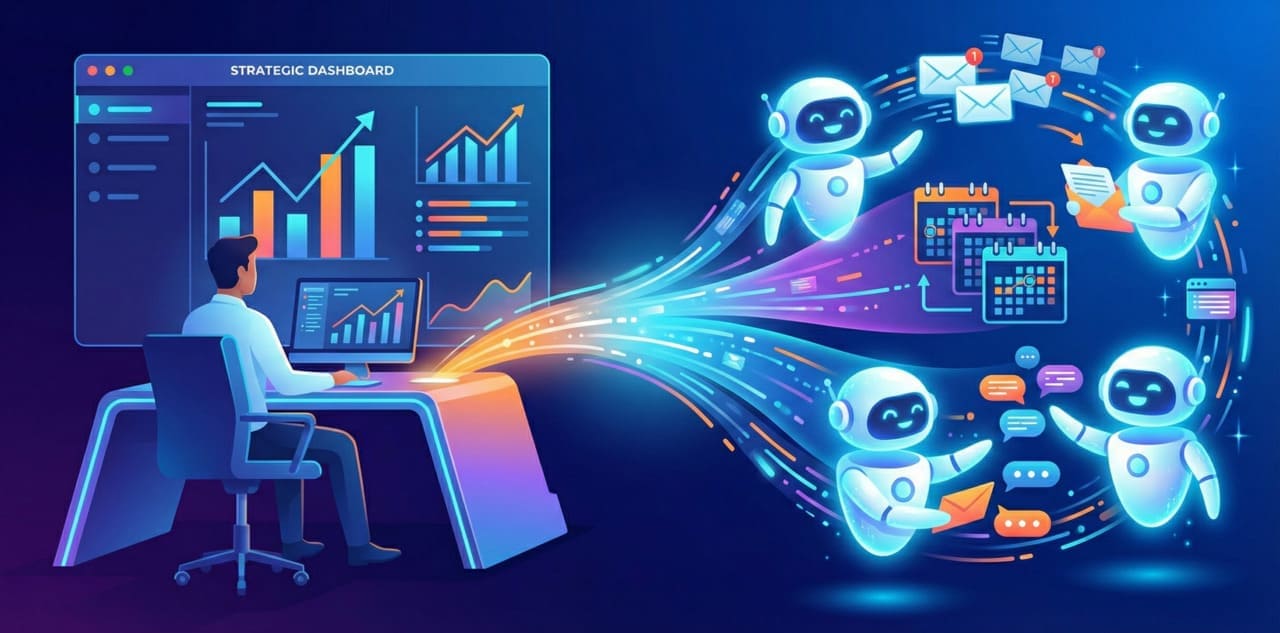
The discussion about artificial intelligence replacing human employees is everywhere. It raises concerns, uncertainty, and sometimes even resistance. But what if we look at it from a different angle? Not as a risk, but as a tremendous business opportunity. The goal is not to fire loyal employees, but to replace inefficiency. Instead of focusing on headcount reduction, the right strategic focus is on automating expensive, routine, and time-consuming tasks to free up capital and personnel for tasks where they can create real value.
We are heading towards a mixed workforce model, consisting of human employees and digital employees (AI). In this model, everyone gets the tasks best suited to their abilities. Humans focus on strategy, creativity, and interpersonal relationships, while AI handles repetitive actions, data analysis, and quick responses. The goal is growth and innovation, not just cuts. It's important to understand: this revolution is not here to "replace" humans, but to "upgrade" the capabilities of the entire organization.
Part 2: The Financial Model: How Does AI Save and Generate Money?
The economic justification for integrating AI employees is clear and unambiguous. It falls into two main areas: direct cost savings and a direct increase in revenue.
The Cost Savings Equation
To understand the savings, we need to look at the true cost of a human employee. It's much more than a monthly salary. The total cost includes social benefits, insurance, office equipment, office space, training, sick days and vacations, and also the hidden cost of human errors.
Let's take a concrete example: a junior customer service representative or salesperson costs the business an average of 15,000 NIS a month (including employer costs). Annually, this is an expense of 180,000 NIS. A digital employee that performs the same routine tasks - answering FAQs, scheduling meetings, filtering leads - can cost a fraction of that. The initial development and implementation cost may be X, but ongoing maintenance is significantly lower. The Return on Investment (ROI) in such an AI solution can reach hundreds of percent already in the first year, not only from direct savings but also from increased productivity.
A Revenue Generation Engine
A digital employee is not just a tool for savings, but a sales and customer service machine that works non-stop.
- 24/7 Availability: A digital employee doesn't sleep, doesn't go on vacation, and doesn't get sick. It is always available to answer inquiries from potential customers, from anywhere in the world and at any time. This means that no important sales opportunity or service inquiry is missed.
- Sales at Scale: An AI employee can manage thousands of sales conversations simultaneously, offer complementary products (Upselling), recommend upgrades (Cross-selling), and personalize offers for each customer. This increases the average order value and accelerates sales growth.
- Customer Retention: Fast, accurate, and efficient service is the key to customer satisfaction. AI that provides immediate support and solves problems in real-time improves the customer experience, increases their loyalty, and raises the Lifetime Value (LTV). A satisfied customer is a returning, and recommending, customer.
Part 3: The Roadmap to Smart Replacement: Which Roles Are the First Candidates?
Not every role is suitable for automation. The key to success is a smart identification of the processes and roles where AI will provide the highest value. Here is a framework to help you identify the first candidates:
- Rule #1: High Volume, Low Complexity: Focus on roles characterized by repetitive tasks, such as data entry, meeting coordination, or answering frequently asked questions.
- Rule #2: Data-Driven Processes: Roles that require collecting, processing, and entering large amounts of information are ideal for automation. For example, filtering resumes, initial lead screening, or report analysis.
- Rule #3: Speed of Response is a Competitive Advantage: Roles where response time is critical, such as initial response to sales inquiries or real-time customer support.
Key Examples of Roles Ripe for Automation:
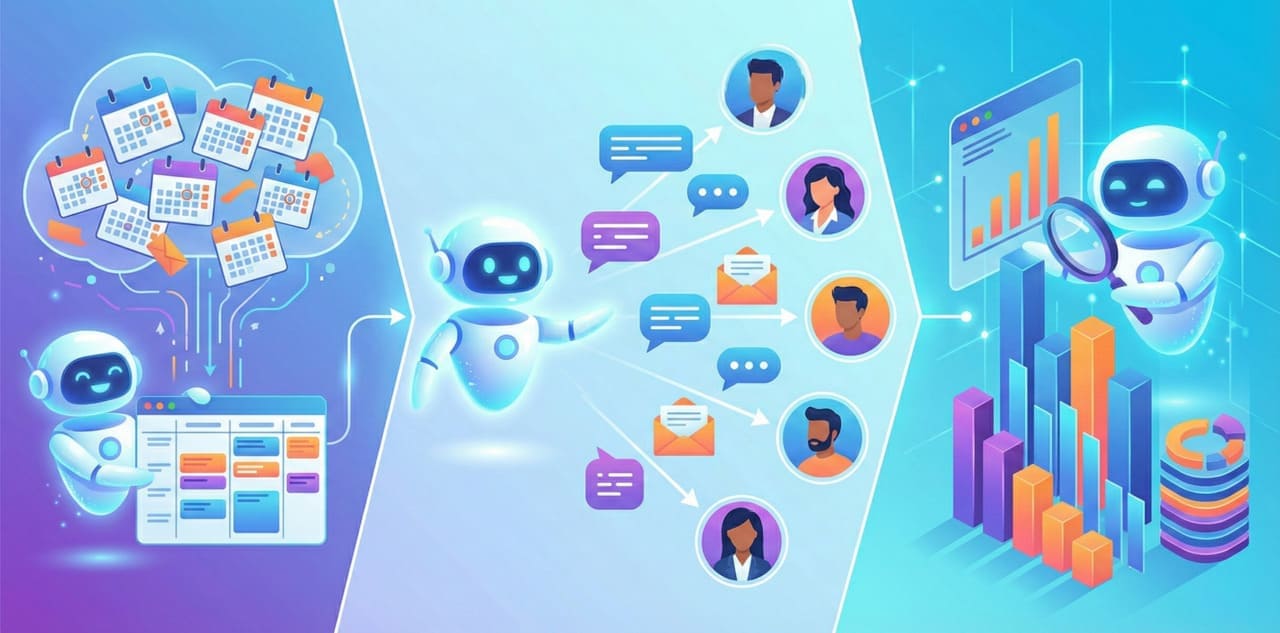
- Smart Administrative Operation (Agentic Automation): Moving from simple IF/THEN automation, 2026 bots present new levels of autonomy. These systems include autonomous calendar coordination that calculates representative constraints in parallel, and running cross-system scripts in B2B and B2C - from collection expectation coordination to contract signing and customer onboarding.
- Secretary and Meeting Coordinator: AI can manage calendars, coordinate meetings with multiple participants, send reminders, and collect preliminary information before a meeting.
- Junior Sales Development Representative (SDR): Instead of employing a worker to make dozens of "cold" calls and deal with rejections, AI can manage the initial contact across thousands of channels simultaneously (email, WhatsApp, SMS), filter leads according to precise criteria, and provide human salespeople only with the hottest and most ripe leads, ready to close.
- Data Analyst Assistant: A digital employee can generate daily or weekly reports automatically, collect data from various sources (Google Analytics, CRM systems, campaigns), and flag anomalies or trends requiring human attention. This frees analysts to focus on in-depth analysis and providing strategic recommendations.
- Digital Campaign Manager (at a basic level): Bots can perform automatic optimization for campaigns, perform A/B Testing on ads and headlines, and allocate budgets dynamically based on real-time performance.
Want to consult with us?
We can help you choose, build and deploy the perfect AI solution for your business. Leave your details and we'll get back to you.
Part 4: The Implementation Process: How to Start Building a Digital Workforce?
The transition to a mixed work model requires planning. It doesn't happen overnight.
- Discovery Phase: We begin with a diagnostic workshop together with the client. We analyze existing processes in the business, identify bottlenecks, and the routine tasks that consume the most time and resources. The goal is to build a "target bank" for automation.
- Planning Phase (PoC - Proof of Concept): We select one or two high-impact processes and start a pilot. We build a first digital employee that handles a specific task. This allows us to measure success, get feedback from the team, and prove feasibility before expanding.
- Connection and Activation Phase: After PoC approval, we activate the full solution. WhaleBiz AI agents connect to the channels your customers already use - WhatsApp, your website, Instagram, Telegram, and Facebook - and work alongside the built-in WhaleBiz CRM, so the digital employee "talks" to every part of your business process.
- Launch and Optimization Phase: We launch the digital employee and start monitoring performance. This stage is critical: we collect data, analyze interactions, and continuously optimize to improve the AI's efficiency and accuracy.
Part 5: Beyond Cost-Benefit: The Strategic Advantage of a Digital Workforce
The benefits of integrating digital employees go far beyond cost savings. It is a strategic shift that empowers the entire business. We at WhaleBiz specialize in autonomous AI agents for business that help businesses realize this potential.
- Unlocking Human Potential: When human employees are freed from monotonous tasks, they can focus on what they do best: strategic thinking, building deep customer relationships, solving complex problems, and closing large deals.
- Flexibility and Scalability: A business can grow from 100 customers to 10,000 customers without proportionally increasing the operations or customer service team. AI employees allow rapid growth with minimal costs.
- Data-Driven Culture: Every interaction of a digital employee is an opportunity to collect data. This data provides valuable insights into customer behavior, needs, and pain points. This allows the business to make smarter, faster decisions and stop relying on "gut feelings".
Part 6: Conclusion and Call to Action
Smart implementation of digital employees is no longer an option, but a vital strategic move for any modern business that aspires to increase profitability and secure a competitive advantage. It is an engine of growth that allows businesses to be more efficient, faster, and smarter. The question is not whether to integrate AI employees, but how fast you can start reaping the rewards and enjoying the advantage over competitors.
Ready to build your first digital employee and see the return on investment? Contact us for strategic consulting on automation and we will show you how to get started.
Frequently Asked Questions
Are digital employees meant to fire my human staff?
The goal is not to fire loyal employees but to replace inefficiency and automate expensive, routine, time-consuming tasks. The recommended model is a mixed workforce in which human employees focus on strategy, creativity, and interpersonal relationships, while the AI handles repetitive actions and quick responses. This way the revolution upgrades the capabilities of the entire organization instead of simply replacing people.
Which roles in the business are the first candidates to move to a digital employee?
There are three rules for spotting them: high volume with low complexity, data-driven processes, and cases where speed of response is a competitive advantage. In practice these are roles like a secretary and meeting coordinator, a junior sales development representative handling initial contact, a data analyst assistant, and a basic-level digital campaign manager. It is best to start with repetitive processes such as scheduling meetings, filtering leads, and answering frequently asked questions.
How do you start the process of implementing a digital workforce in the business?
Implementation happens in four phases and does not occur overnight. You begin with a discovery phase that analyzes existing processes and builds a target bank for automation, move on to a planning phase in the form of a PoC pilot on one or two high-impact processes, and then to a connection and activation phase. In the final phase you launch the digital employee, monitor performance, and carry out continuous optimization to improve efficiency and accuracy.
Which channels do WhaleBiz AI agents connect to?
WhaleBiz AI agents connect to the channels your customers already use - WhatsApp, your website, Instagram, Telegram, and Facebook. They work alongside the built-in WhaleBiz CRM so the digital employee talks to every part of your business process. This way no sales opportunity or service inquiry is missed, with full availability around the clock.

Michael Romm
Michael is the founder and CEO of WhaleBiz, leading business and marketing strategy. An expert in data (SQL, Python) and developing automation and AI solutions for businesses.