
Autonomous Sales and Service Engine (ASE): Speed and Cadence
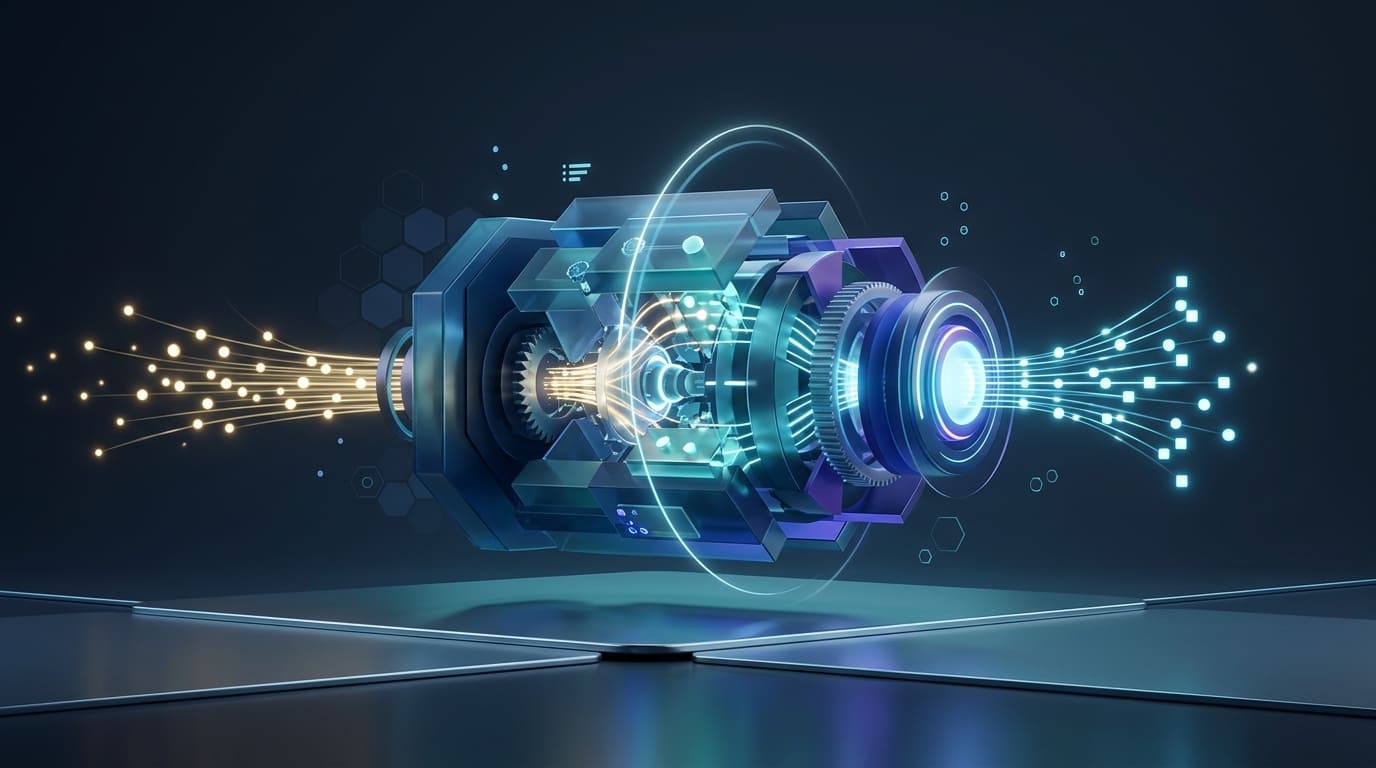
The Autonomous Sales and Service Engine: a clock that starts ticking from second one
The Autonomous Sales and Service Engine (ASE or ASSE for short) is the vision of an operational core that goes to work the very second an inbound inquiry arrives. That image is the whole point: the moment a lead appears, a clock starts, and from that second the revenue inside that inquiry begins decaying minute by minute. A lead who messages on WhatsApp at 22:47 and waits two hours for a reply is no longer worth what they were worth when they hit send. By morning they are worth a fraction of it. The engine exists for exactly one reason: to stop that clock from ticking the value away.
The engine metaphor is not decoration. An engine is measured by three things: first-response latency, follow-up cadence, and throughput under load. A human team loses on all three not out of laziness but out of physics: people sleep, take lunch, sit in meetings, run out of steam by the fourth follow-up, and physically cannot hold seconds-level response times around the clock. ASE / ASSE removes those limits not because "a bot types faster" but because an engine has no waiting queue and no night.
An honest frame up front. The Autonomous Sales and Service Engine is a category and a direction - the north star WhaleBiz is deliberately building its technology toward, not a finished turnkey product that closes deals fully autonomously. What already works today is broken out in its own block below, and we hold that line honestly throughout this article.
What WhaleBiz delivers today: AI agents that run on WhatsApp, your website, Instagram, Telegram, and Facebook - capturing and qualifying leads, handling support, and booking appointments 24/7, with a built-in WhaleBiz CRM, in Hebrew, Russian, and English, voice-capable. That is the first and most valuable stroke of the engine. The fully closed autonomous loop of "inquiry - follow-up - deal closed with no human in it" is a direction of travel, not a shipped feature.
Why an "engine" and not a "department" or a "team"
Every concept in this cluster runs on its own axis, and it pays not to mix them up. The Autonomous Sales Department is about the asset and the strategy: who owns the business's intelligence and the economics of the model (see the Autonomous Sales Department). The multi-agent orchestration platform is about architecture: how specialized agents divide the work and hand off context (see the multi-agent orchestration platform). The engine is about the physics of the process: how many inquiries per unit of time the system pushes through without losses, and at what latency.
The distinction is fundamental. You can hire excellent people (the "who") and design an elegant architecture (the "how"), but if latency leaks at the front door, the follow-up cadence breaks, and the data never gets written down, the engine stalls. ASE / ASSE focuses on exactly the machine metrics: time to first response, after-hours coverage, lead leakage rate, follow-up consistency, completeness of self-documentation, and throughput at peak.
The four strokes of the engine's working cycle
Like any engine, ASE / ASSE runs a repeating cycle that fires on every single inquiry:
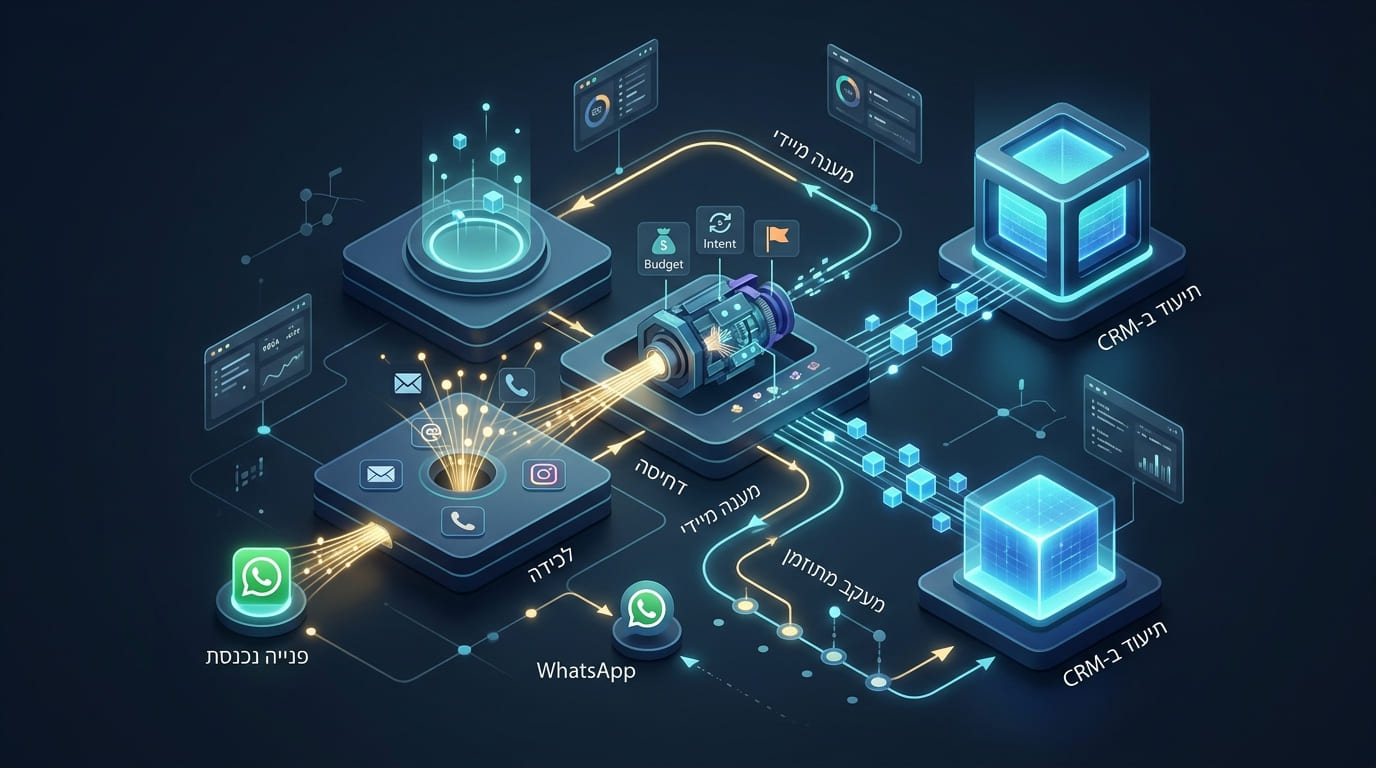
- Intake (capture). Every inbound touch - a WhatsApp message, a website form, an Instagram DM, a chat on Telegram or Facebook, a voice request - lands in one combustion chamber. No channel sits outside the engine.
- Compression (qualification and routing). The engine reads intent, pulls out budget, source, and urgency, assigns priority, and routes the inquiry down the right path.
- Power stroke (response and follow-up). An instant reply, followed by a precise, scheduled series of touches - no "forgot to call back," no "lost over the weekend."
- Exhaust (self-documentation). Every conversation, in full, with its metadata, is written to the CRM automatically. Not a side effect but a built-in stroke - fuel for the next cycle.
First-response latency: the metric that decides everything
If you could give the engine one metric and one only, it would be first-response latency - the time from a lead appearing to the first meaningful reply. Research on inbound handling has repeated the same finding for decades: the odds of a productive contact collapse within the first minutes. Across various studies, going from a 5-minute response to a 30-minute response cuts the chances of qualifying a lead several times over. A human team simply cannot hold single-digit seconds around the clock: it sleeps, eats, walks into meetings - and those are exactly the windows in which traffic you have already paid for burns away.
The engine eliminates latency as a class of problem. Already today, WhaleBiz agents respond on WhatsApp, websites, and social channels instantly and around the clock - that is the first and most valuable stroke of the engine we are building toward full autonomy. Speed here is not cosmetic; it is the main lever: the less the clock ticks before the first reply, the more of the inquiry's value stays on the table.
Follow-up cadence as the moment of inertia
One reply rarely closes a deal. Real throughput is set by follow-up cadence - the discipline of repeated touches. With humans, cadence is the first thing to break: by day three or four, in the churn of daily work, that lead is simply forgotten. The engine holds cadence mechanically: a touch on the right step, in the right channel, informed by the context of the previous conversation - until the lead replies, books, or explicitly declines. It is the consistency of the cadence, not the heroics of any one rep, that recovers the conversion points currently leaking away between the third and seventh touch.
How the engine keeps leads from leaking and going cold
A leaked lead is not a single event; it is the sum of small breaks in the cycle. The engine closes them the way an engineer would - break point by break point.
The three breaks a lead escapes through
- Response delay. The lead writes, no reply for minutes or hours - interest cools. The engine answers in seconds; break closed.
- The after-hours dead zone. Night, Saturday, lunch - no human is there, and the inquiry hangs in a queue. The engine runs 24/7; there is no dead zone.
- Broken follow-up. After the first contact the series of touches falls apart, and the lead goes cold in silence. The engine holds the cadence mechanically until there is an explicit resolution.
The point is that the engine closes all three breaks at once instead of picking one. The rep who heroically replies in seconds during the day still creates a dead zone at night and drops the cadence by the fourth touch. The machine removes the source of the leak, not the symptom: there is no window in which the clock ticks unattended.
Want to consult with us?
We can help you choose, build and deploy the perfect AI solution for your business. Leave your details and we'll get back to you.
Self-documentation: the exhaust stroke that feeds an AI-native CRM
This is where ASE / ASSE plugs into another pillar of the WhaleBiz strategy - the AI-native CRM. For the full picture, see what an AI-native CRM is. The short version: in a classic CRM, a human has to enter the data manually after the conversation, and that is precisely the stroke where the system breaks - empty fields, unsaved conversations, lost traffic sources.
The engine flips the logic. Documentation is not a task someone "must not forget"; it is the built-in exhaust stroke of the cycle itself. Every inquiry that passes through ASE / ASSE settles into the CRM on its own: full conversation transcript, source, budget, status, touch history. That produces two effects a manual process can never deliver.
First, zero knowledge leakage: when a rep leaves, they do not walk out with the memory of your customers - it is already in the system and it belongs to the company. Second, a compounding first-party data effect: the more inquiries pass through the engine, the richer and cleaner the data core becomes. This is your own data about real customers, not data rented from platforms - fuel for qualification, scenario training, and ever more precise routing. The engine does not just run on data; it continuously produces it, which is why it gets better over time. That is the whole point of the pairing: the engine as the operational core that feeds an AI-native CRM.
Head to head: a manual sales pipeline vs an autonomous engine
To see the difference in machine metrics rather than slogans, let's compare the traditional manual sales pipeline against the ASE / ASSE engine on exactly the parameters used to measure throughput.
| Engine metric | Manual sales pipeline | Autonomous engine (ASE / ASSE) |
|---|---|---|
| Time to first response | Minutes to hours, depends on workload | Seconds, consistently |
| After-hours coverage | None: nights and weekends are a dead zone | Full 24/7 |
| Follow-up cadence and consistency | Breaks by touch 3-4 | Cadence held mechanically |
| Lead leakage | High: inquiries get lost in the queue | Minimal: every inquiry is caught |
| Data capture and self-documentation | Manual, partial, fields go missing | Automatic, full record in the CRM |
| Throughput at peak | Drops: queues, fatigue | Independent of volume |
Notice that not a single row says "people are cheaper" or "fewer people." That is deliberate. Headcount and HR economics are a separate axis in this cluster. Here we measure nothing but the physics of the engine: speed, coverage, zero leakage, cadence discipline, and throughput.
How to start moving toward ASE / ASSE in practice
Full autonomy is the horizon. But the first and most valuable stroke of the engine is available today. The practical WhaleBiz route looks like this:
- Put instant 24/7 response into your hottest channel - usually WhatsApp - to kill latency first.
- Connect the remaining channels (website, Instagram, Telegram, Facebook) to one combustion chamber so that no inquiry slips past the engine.
- Switch on self-documentation into the built-in CRM so the data core starts compounding from day one.
- Set the follow-up cadence and watch the machine metrics: latency, leakage rate, completeness of records.
On the product side, the entry point is the sales solution: the WhaleBiz sales solution. It is not "the whole autonomous engine at once" - it is the engine's operational core, the place where the route to full throughput begins.
Frequently asked questions
What is the Autonomous Sales and Service Engine (ASE / ASSE)?
The Autonomous Sales and Service Engine (ASE or ASSE for short) is an always-on operational core that captures an inquiry the second it appears, replies instantly, qualifies, routes, holds the follow-up cadence, and writes every contact into the CRM on its own. It is measured like a machine: by first-response latency, follow-up cadence, and throughput under load. It is a category and the direction WhaleBiz is building toward, not a finished, fully autonomous product.
Why does time-to-first-response matter so much?
Because a clock starts the moment a lead appears, and the value of the inquiry decays by the minute. Across various studies, going from a 5-minute response to a 30-minute response cuts the odds of qualifying a lead several times over, and by morning a nighttime inquiry is worth a fraction of what it was. The engine removes latency as a class of problem: it has no queue and no night, so the clock never gets to tick the value away.
How does the engine keep leads from leaking and going cold?
Leads escape through three breaks in the cycle: response delay, the after-hours dead zone, and broken follow-up. The engine closes all three at once - it answers in seconds, runs 24/7, and holds the cadence of repeated touches mechanically until there is an explicit resolution. Unlike a human, who heroically closes one break during the day while creating the others at night and by the fourth touch, the machine removes the source of the leak itself.
How does self-documentation feed an AI-native CRM?
For the engine, documentation is not a task someone can forget; it is the built-in exhaust stroke: every inquiry settles into the CRM on its own as a full transcript with source, status, and touch history, with no manual data entry. That delivers zero knowledge leakage when employees leave and a compounding first-party data effect: the more inquiries pass through the engine, the richer and cleaner the data core becomes. That proprietary data then feeds sharper qualification and routing - the engine gets better over time.
How is the engine different from a chatbot or process automation?
An old-generation chatbot runs a rigid script and is measured by the number of messages answered, while process automation executes pre-written rules. The engine is measured differently - by the machine metrics of throughput: response latency, follow-up cadence, leakage rate, and completeness of self-documentation. It is not another tool in someone's hands; it is the operational core itself, through which the entire flow of inquiries passes and gets processed.

Anthony Malts
Anthony is an AI Solutions Architect at WhaleBiz, overseeing the end-to-end architecture, system integration, and deployment of AI agents and enterprise solutions. He specializes in designing robust cloud infrastructure, scalable workflows, and tailored technology systems for businesses.