
Website Sales Bot: AI That Sells 24/7
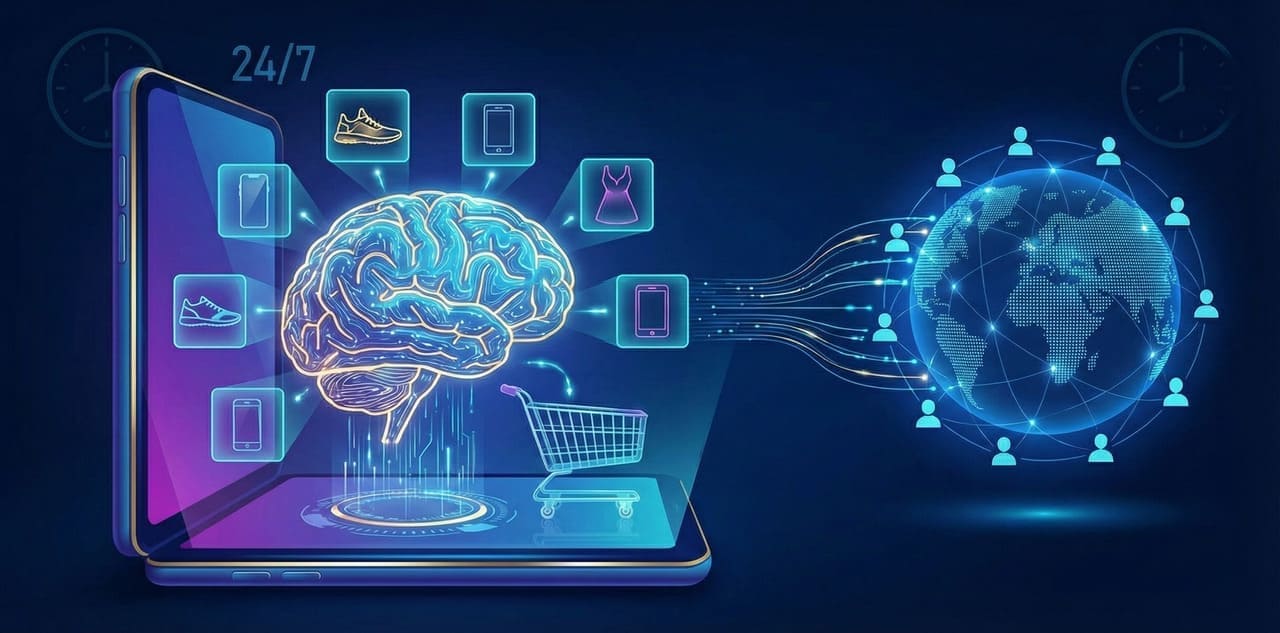
Website Sales Bot: It's Not a Chat, It's Your Digital Salesperson
A sales bot for an ecommerce website is not just another chat "pop-up" or a tool for collecting details. In the AI era, it's a proactive AI assistant whose goal is to guide the customer through the purchasing journey, provide personalized recommendations, answer complex product questions, handle hesitations, and ultimately - increase the conversion rate and close deals.
While most websites offer outdated chatbots that frustrate customers and cause them to abandon their carts, at WhaleBiz we identified this huge gap. We are not a "digital agency," but a team of Data Science and artificial intelligence experts. We understand that our knowledge in data analysis, model building, and natural language processing (NLP) is the key to creating a sales bot that truly knows how to listen, understand, and sell. Our solution turns passive visitors into active buyers.
The Painful Gap: Why Do Most "Bots" on Ecommerce Sites Fail?
The main reason for cart abandonment (an average of about 70% globally) is friction. The customer hesitates, has a small question, isn't sure about the size, the shipping policy isn't clear, or they are simply overwhelmed by options. They are looking for help.
This is where most bots fail because they are:
- Passive: They wait for the customer to click on them and type a question.
- Menu-based: They offer "1 for shipping, 2 for customer service," which feels like a frustrating phone answering machine.
- Dumb: When the customer asks a real question ("Are these shoes suitable for trail running in the rain?"), they answer "I didn't understand."
- Disconnected: They are not connected to the inventory, don't know who the customer is, and don't understand which page they are currently browsing.
Such a bot not only fails to sell, it actively harms the sale and causes the customer to abandon to a competitor's site.
The WhaleBiz Revolution: From Data Science to an AI Assistant That Sells
This is where our expertise comes into play. We don't provide a "plugin." We build and customize a website sales bot based on our core principles:
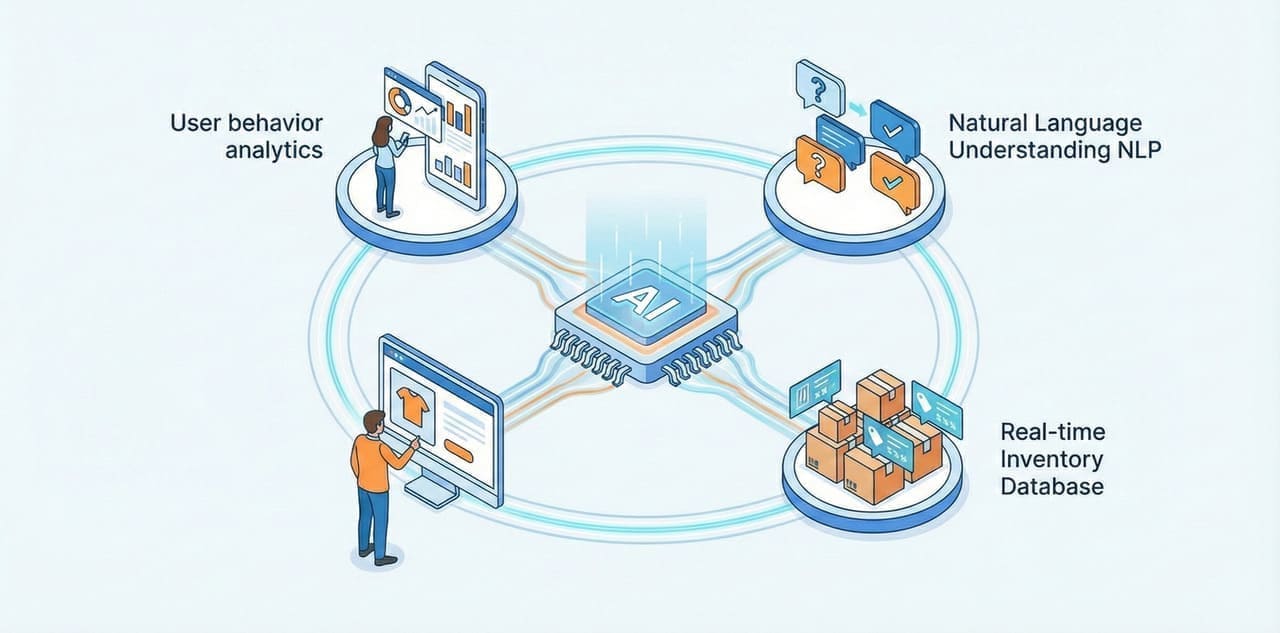
- Natural Language Processing (NLP): Our assistant understands everyday language. It understands the difference between "Where is my order?" (service) and "I'm looking for a black dress for an event" (sales). It understands context, intent, and nuance.
- Data and Behavioral Analysis: The assistant analyzes the visitor's behavior in real time. It knows how long the visitor has been on the page, what products they looked at, and what they added to the cart.
- Proactive Models: Based on the data, the bot initiates action. It doesn't wait for the customer to ask, it offers help at the right moment.
- Deep API Integrations: Our solution connects to your core systems - inventory, CRM, shipping system, and product database (PIM). The bot knows in real time what's available, what the price is, and what the status of every order is.
What Does a Smart "Sales Bot" Actually Know How to Do?
Let's dive into the functionality that turns passive browsing into an active purchasing experience:
1. Proactive Sales Advisor
The customer has been browsing the "Cameras" category for 3 minutes and is comparing two models.
- The bot initiates: "Hi, I noticed you're comparing model X and model Y. It's not an easy decision! Model X is excellent for night photography, while model Y is stronger in video. What is your primary use?"
- The result: The customer receives immediate value, directs themselves, and saves valuable research time.
2. Personalized Recommendations
Based on data analysis, the bot knows how to offer:
- Personalization: "I saw you're interested in button-down shirts. Based on your previous purchases, I think you'll love the new linen collection."
- Cross-Sell: "You added these pants to your cart. Most customers who bought them also added this matching belt."
- Up-sell: "The 128GB model you chose is excellent. I just wanted to update you that the 256GB model is now on sale, for a difference of only $40."
For a deeper look at the recommendation engine itself, plus upsell, cross-sell, and returns handling after the sale, see our ecommerce recommendation bot and our AI agent for customer retention.
Want to consult with us?
We can help you choose, build and deploy the perfect AI solution for your business. Leave your details and we'll get back to you.
3. Handling Hesitations and Removing Friction
This is the most critical stage. The bot answers the questions that make the customer hesitate:
- "Do these jeans stretch after washing?"
- "What is your return policy?"
- "Will the shipment arrive before Thursday? I have an event."
- "I saw this at a competitor for a lower price." (The bot can explain about the warranty, service, or authenticity).
4. Live Cart Abandonment Recovery
The bot identifies that the customer added items to the cart, reached the checkout, and is now about to abandon (for example, moving the mouse towards closing the tab).
- The bot intervenes: "Wait before you go, I noticed you left items in your cart. Did you encounter a problem during the payment process or do you have a question about one of the products?"
- This action alone can save a significant percentage of lost sales.
Q&A: Everything You Need to Know About an AI Assistant for a Sales Website
We understand that introducing AI into the sales process can feel intimidating. Here are answers to the most common questions we hear from customers.
Question: "But customers hate bots. They prefer to talk to a person. Won't this annoy them?"
Answer: That's an excellent point, and it's absolutely true for outdated bots. Customers hate feeling like they're talking to a robotic wall. That is exactly why our expertise at WhaleBiz is in NLP (Natural Language Processing). The goal is to create a conversation that feels natural, helpful, and assisting.
Additionally, the goal is not to replace the human team, but to empower it. Our AI assistant handles 80% of routine questions (sizes, inventory, shipping) immediately, 24/7. When it identifies a complex question, a sensitive complaint, or an explicit request to "speak to a representative," it performs a "Live Handoff" to an available human agent. The agent receives the entire chat transcript, so the customer doesn't have to repeat themselves. The result: the customer gets an immediate response, and human agents are freed up to handle only the truly important cases.
Question: "My catalog is huge, with 20,000 products that update every day. How will the bot know everything?"
Answer: That is exactly the advantage of working with a Data Science company and not a "digital agency." We don't manually write 20,000 scripts. Our solution is a model that connects directly (via API) to your database (PIM or the website's database). When a product goes out of stock, the bot knows it immediately. When a new product arrives, the bot can access its specifications and answer questions about it. We also "train" the AI on all existing content on the site (blogs, guides, reviews) so it can answer in-depth questions ("Is this coat warm enough for a ski vacation?").
Question: "Can a sales bot really 'close' a deal on its own?"
Answer: Absolutely. "Closing a deal" on ecommerce sites means leading the customer to click the "Checkout" button when they feel secure, have received answers to all their questions, and have no more hesitations. A website sales bot does this by removing all friction points along the way. It finds the right size, confirms stock availability, clarifies shipping terms, and offers relevant complementary products. It builds the confidence necessary to complete the purchase.
Points to Consider: Is Your Website Working for You?
- What is the current cart abandonment rate on your site?
- How many sales did you lose this month because customers asked questions outside business hours and went to a competitor?
- How much time does your service team waste answering repetitive questions that AI can answer in a second?
- Does your site offer a passive experience of a "digital shelf," or an active experience of a "personal salesperson"?
Comparison: "Dumb" Ecommerce Site vs. "Smart" Site with AI
| Feature | Standard Ecommerce Site | Site with AI Assistant (WhaleBiz) |
|---|---|---|
| Customer Experience | Passive. The customer searches alone, gets lost. | Interactive. The bot offers proactive help. |
| Answering Questions | Searching FAQ, "Contact Us" form, waiting. | Immediate, 24/7, in the context of the viewed product. |
| Product Recommendations | Generic ("Others also bought..."). | Personalized (based on behavior and conversation). |
| Abandonment Handling | Pop-up, or email reminder a day later. | Identifying hesitation in real time and intervening in chat. |
| Data Collection | Google Analytics (quantitative). | In-depth insights (qualitative): Why do customers abandon? |
Your Website Can Sell Much More.
Your website is your best potential salesperson - it's always available and meets every customer. But for it to sell, it needs the right tools. At WhaleBiz, we don't provide a plugin. We build you a thinking brain based on Data Science that will turn your hesitating visitors into satisfied buyers - and our complete guide to implementing AI in ecommerce shows how it all fits together.
Ready to upgrade the purchasing experience on your site and skyrocket the conversion rate? Talk to an AI expert from our team and let's start specifying the perfect solution for you.

Michael Romm
Michael is the founder and CEO of WhaleBiz, leading business and marketing strategy. An expert in data (SQL, Python) and developing automation and AI solutions for businesses.