
How to Increase Sales with AI: The Complete Business Guide

How to Increase Sales: The Complete Guide to Using AI for Maximum Results
The question "how to increase sales" is the central concern of every manager and business owner. Traditional answers - increasing the marketing budget, hiring more salespeople, or launching promotions - are expensive, time-limited, and don't always deliver the desired results. The modern and most effective solution lies elsewhere: implementing Artificial Intelligence agents (AI Assistants) that know how to sell, provide service, and improve processes 24/7, turning every interaction into a sales opportunity.
At WhaleBiz, we identified a massive market gap: businesses invest heavily in generating leads, but "bleed" them due to long response times, lack of availability, and frustrating service experiences. We are not a "digital agency" - we are a team of Data Science and AI experts. We build data-driven models and solutions that turn your communications into a growth engine, rather than a cost center.
The "Leaky Bucket": The Real Problem Preventing You from Increasing Sales
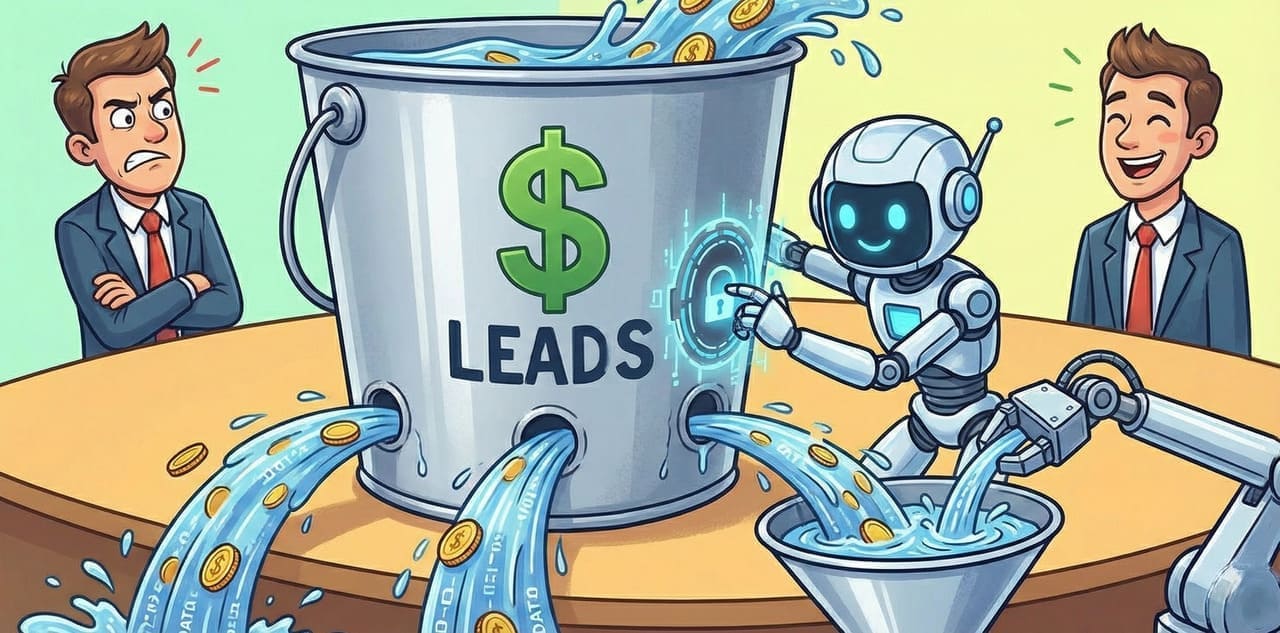
Before asking how to increase sales, it's important to ask "how do I stop losing existing sales?". Most businesses operate on a "leaky bucket" model:
- Massive investment (water in): You invest tens of thousands in paid campaigns (PPC) and organic search (SEO) to bring traffic.
- Immediate leakage (the holes):
- Long response time: A customer contacts you at 10 PM. They're "hot" and ready to buy. They receive a "we'll get back to you tomorrow" response. By morning, they've already closed with your competitor.
- Overloaded salespeople: Your sales team is flooded with leads. They waste 80% of their time filtering "cold" and "curious" leads, instead of focusing on ready-to-buy prospects.
- Frustrating experience: The customer encounters an outdated automated chat. They get stuck in button menus, receive "I didn't understand" responses, and abandon in frustration.
Real sales growth starts by closing these holes. This is where next-generation AI agents come into the picture.
The Solution: 3 Types of AI Assistants Designed to Increase Sales
To increase sales, you need to act on three fronts: converting new leads (sales), guiding undecided customers (consulting), and retaining existing customers (service). A modern AI solution from WhaleBiz addresses all three.
1. AI Sales Agent: The "Closer" That Works 24/7
This is not a regular chatbot, but a proactive AI sales agent. Its role is to qualify every incoming lead and automatically close simple transactions.
How does this increase sales?
- Speed-to-Lead: It responds to every incoming lead in less than 3 seconds, 24/7. It "catches" the customer when they are at peak interest.
- Smart Lead Qualification: It manages a conversation, asks characterization questions (budget, need, urgency) and filters out "curious browsers."
- Warm Transfer: It transfers to the human sales team only "hot," qualified leads, along with the full conversation transcript. Your salespeople stop wasting time and focus only on closing.
- Upsell and Cross-sell: It knows how to identify opportunities and naturally suggest complementary products ("Customers who bought this camera also added a fast memory card").
2. AI Consultant Agent: The "Expert" That Builds Trust
In businesses with complex products (B2B, real estate, finance, technology), customers don't buy immediately. They need information, advice, and guidance. An AI consultant agent is a super-expert trained on all of your knowledge base.
How does this increase sales?
- Authority Building (EEAT): It answers complex technical questions ("What's the difference between model X and model Y?", "How does your product integrate with Salesforce?").
- Personal Guidance: It understands the customer's need ("I'm looking for a solution for a 50-employee company") and recommends the most suitable package or product.
- Market Education: It provides value, sends relevant articles and guides, and establishes you as an authority in the field. A customer who received value will buy from you.
- Dynamic Recommendation Engine with Adaptive Pricing (Practical Case Study): Instead of giving a generic quote, storefront analytics allows the agent to offer personalized pricing packages in real time, increasing long-term customer lifetime value (LTV).
3. Smart Support Bot: The "Guardian" That Increases LTV
Many managers asking how to increase sales think only about new customers, forgetting the gold mine of existing customers. It's 5 times easier and cheaper to sell to an existing customer than to acquire a new one. A smart support bot is the key to customer retention.
How does this increase sales?
- Immediate Service = Loyalty: A customer stuck on a technical issue or shipping question who gets an immediate solution (even at 2 AM) becomes a loyal customer.
- Freeing Up the Service Center: The bot handles 80% of routine inquiries (order status, password reset, opening hours).
- Identifying Opportunities in Service Conversations: The bot identifies that a customer is satisfied with a specific product and can offer them an upgrade or complementary product. It turns a service call into a sales opportunity.
Want to consult with us?
We can help you choose, build and deploy the perfect AI solution for your business. Leave your details and we'll get back to you.
Why WhaleBiz Solutions Are Not "Just Another Chatbot"
This is where it's important to understand the fundamental difference. The market is flooded with "do-it-yourself" solutions and menu-based chatbots that frustrate customers. This is not how to increase sales; this is how to frustrate customers.
As a Data Science and AI company, our approach is fundamentally different:
- We build NLP models: We don't use templates. We build a language model (NLP) trained to understand the nuances, slang, and intentions of your customers.
- We analyze data: We start by analyzing your existing inquiries to understand what customers are really asking, and what the friction points are in the process.
- We perform deep integration: Our agents connect to your CRM, ERP, inventory system, and knowledge bases. They perform real actions (like scheduling a meeting), not just collect details.
Comparison: Regular Chatbot vs. WhaleBiz AI Assistant
| Feature | 'Dumb' Chatbot (Rule-Based) | AI Assistant (Data Science-Powered) |
|---|---|---|
| Main Purpose | Collecting details, menu-based answers | Managing conversation, solving problems, selling |
| Language Understanding | Limited to exact keywords | Understands context, intent, and nuances (NLP) |
| Flexibility | Rigid. "I didn't understand, try again" | Dynamic. Remembers context, asks follow-up questions |
| Integration | Basic (sends email) | Deep (checks inventory, schedules meeting, updates CRM) |
| Business Result | Customer frustration, collecting "cold" leads | Increasing sales, qualifying leads, improving satisfaction |
Frequently Asked Questions: Everything You Need to Know About AI in Business
Q: "I'm worried a bot will feel robotic and push customers away. People want a human touch."
A: That's an excellent point, and it's completely true for outdated bots. Customers don't hate bots; they hate stupid bots. They love getting immediate, efficient, and accurate answers to their questions at 3 AM. The goal of a smart business chatbot is not to replace human interaction, but to free up time for it. The AI assistant handles all routine and technical questions, and when it detects emotional complexity, a complaint, or an explicit request for a human agent, it performs a smooth handover to the right person, with the full conversation transcript. Your human representatives are freed up to handle truly important cases.
Q: "Isn't this too expensive for a small or medium business?"
A: This is a question of return on investment (ROI). Think about how much it costs to keep a salesperson or service representative (salary, benefits, training). Now think about how much it costs you not to have them - how many leads did you lose just this past weekend? An AI sales agent works 24/7/365, never takes vacation, never gets sick, and handles thousands of inquiries simultaneously at a negligible cost per interaction. Implementation pays for itself quickly through leads that weren't lost and sales closed outside business hours.
Q: "My product is very complex. A bot won't be able to answer about it."
A: This is exactly where the AI consultant agent comes in. A regular bot indeed couldn't answer. But our solutions are based on training the model on all of your knowledge base: technical specs, blog articles, product comparisons, catalogs, and more. It becomes the #1 expert on your product and can answer in-depth questions that would have required a senior technical representative.
Numbers That Speak: AI Sales ROI in 2026
One of the most common questions we're asked is "how much does AI actually increase sales?". Here is field data, not marketing:
Verified Industry Data (2025-2026)
- McKinsey (2026): Businesses that implemented AI in sales processes reported an average 15-20% increase in revenue within 12 months of implementation, and a 30% reduction in operational costs of sales centers.
- Salesforce State of Sales (2026): 83% of sales representatives who worked with an AI Assistant reported they are able to respond to customers faster, and 72% reported they can handle more meetings per week.
- Speed-to-Lead: According to Harvard Business Review, a business that responds to incoming leads within a minute increases the probability of closing a deal by 7x compared to a one-hour response. An AI agent responds within 3 seconds, 24/7.
What's the Difference Between "More Technology" and Real Sales Growth?
Here are four KPIs that our customers track before and after implementing an AI agent:
| KPI | Before AI | After AI (WhaleBiz Customer Average) |
|---|---|---|
| Average lead response time | 45 minutes-4 hours | Under 3 seconds |
| % of leads receiving response outside business hours | 0-5% | 100% |
| Amount of inquiries reaching a human agent | 100% | ~20% (qualified, warm, ready) |
| Lead-to-meeting conversion rate | 8-12% | 18-25% |
AI + CRM: The Combination That Generates Data
An AI agent connected to a CRM doesn't just sell - it learns. Every conversation is saved, analyzed, and feeds the model with new insights: which questions recur? Where do customers drop off? What's the most common objection before closing? This data is worth gold to the sales team - and it's generated automatically, without effort.
Points to Consider: Are You Really Doing Everything to Increase Sales?
- How many leads that contacted you via WhatsApp or your website in the past month received a response after more than 15 minutes?
- How much time do your salespeople waste on filtering calls with non-relevant customers?
- If a customer wanted to buy from you right now, at 11 PM, would your process allow them to do so easily?
The answer to the question how to increase sales in the modern era is clear: stop wasting the leads you're already paying for, and let AI handle them immediately, smartly, and efficiently. If you run an online store, our complete guide to implementing AI in ecommerce shows exactly where to begin.
Ready to Stop Losing Leads and Start Selling More?
It's time to stop relying on outdated communication solutions. Our expertise at WhaleBiz is turning your data and conversations into a growth engine.
Let's Talk. Speak with an expert from our team and discover how a personalized AI Assistant can transform your sales and service processes.

Michael Romm
Michael is the founder and CEO of WhaleBiz, leading business and marketing strategy. An expert in data (SQL, Python) and developing automation and AI solutions for businesses.